Hey all -
“Are we playing offense or defense?”
In the lead-up to most major elections, this is perhaps the biggest question we obsess about in Movement Voter PAC’s grantmaking strategy: Should we invest more in shoring up the races we might lose or in swinging for the fences to flip new seats?
This fall, we are blessed to have a different and refreshing question:
Are we going to have a Blue Wave this fall — or a Blue Tsunami?? 🌊
Yes, there are states and districts where we are investing to hold a Democratic seat (the Michigan and New Hampshire Senate races top the list), but the vast majority of our focus is on flipping as many seats as possible. Think of this fall as a one-time “Going-Out-of-Business Sale” on GOP-held seats.
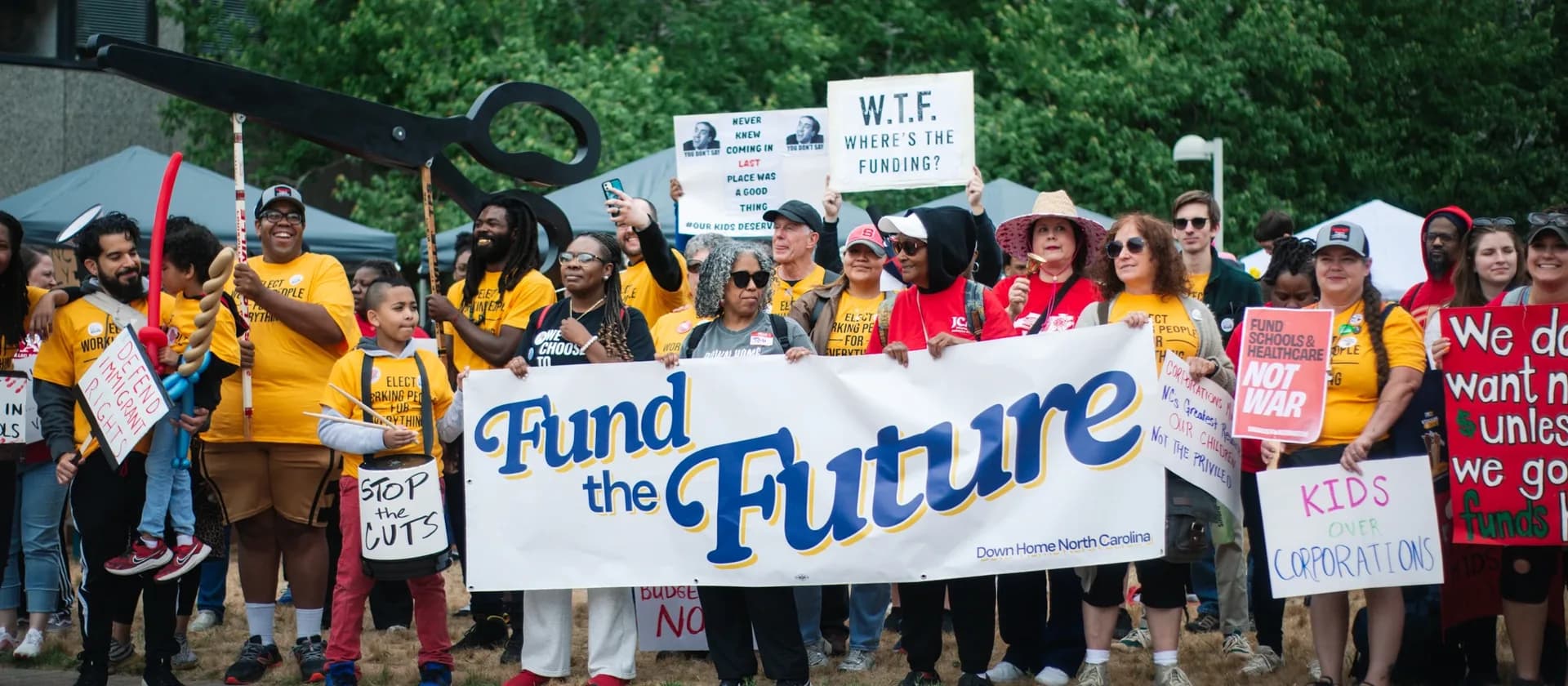
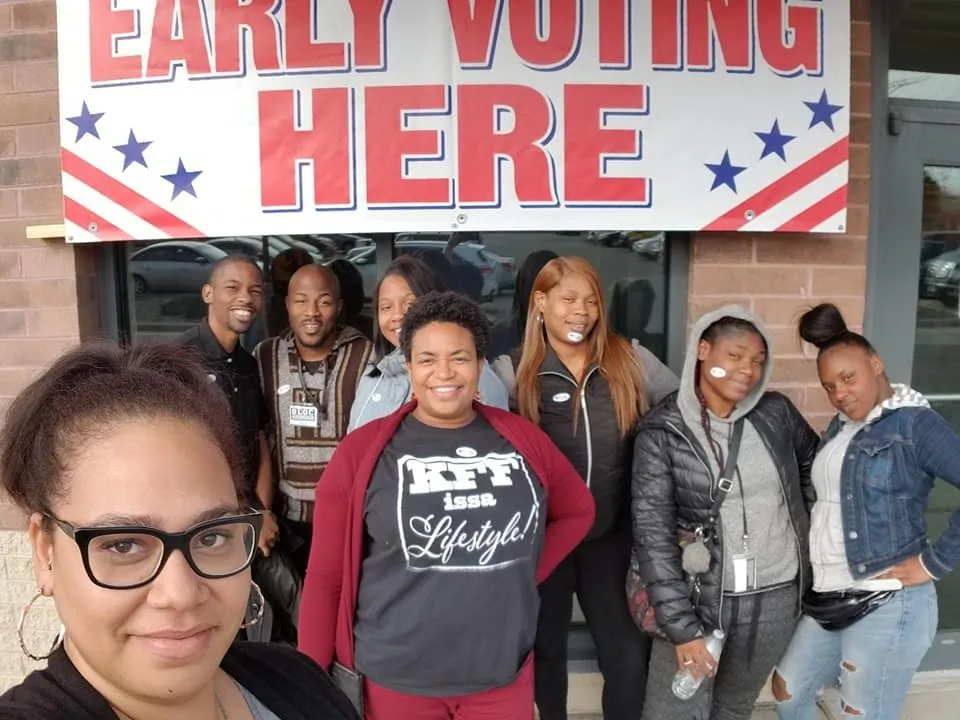
Photo: Down Home North Carolina
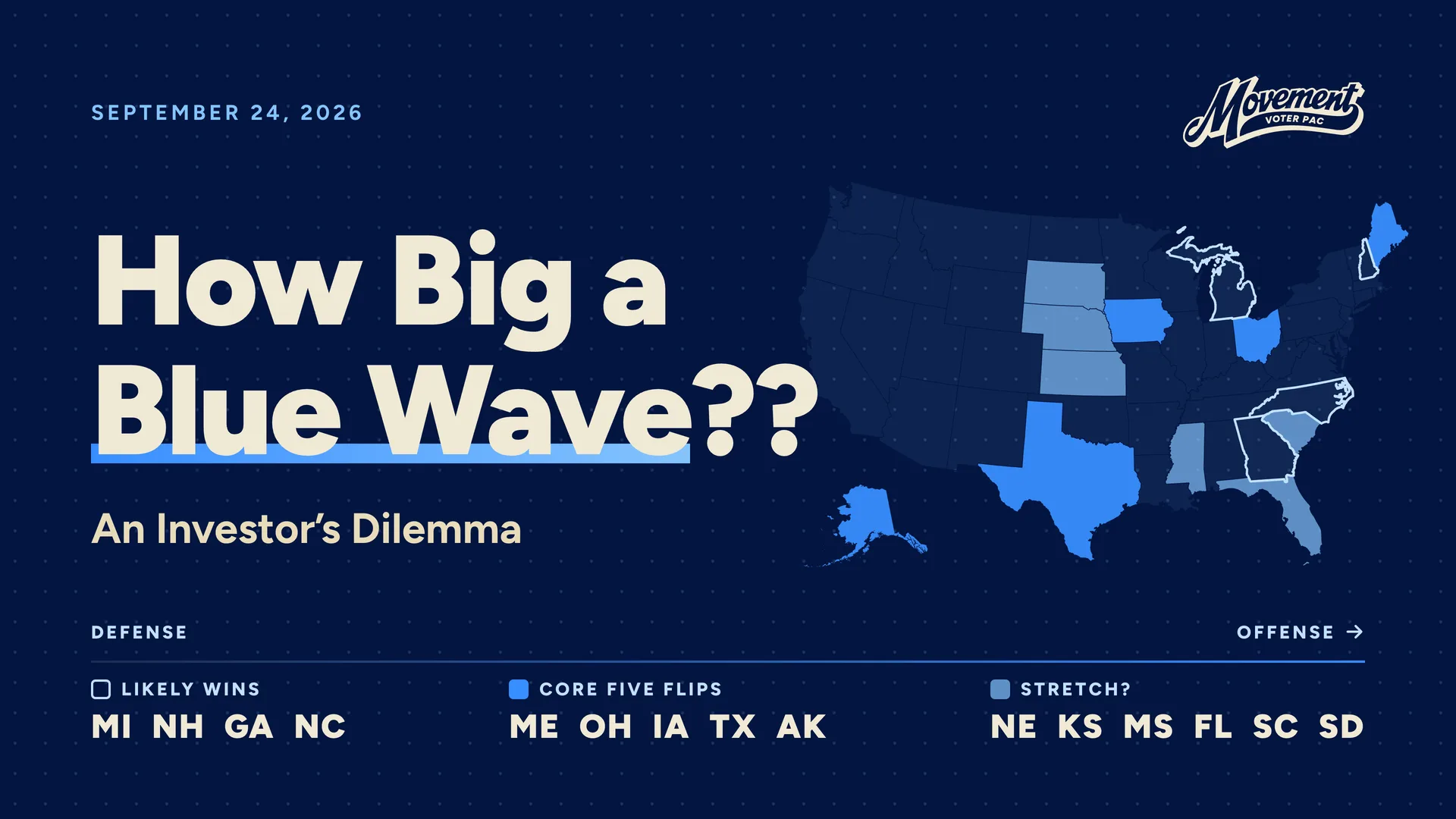
Take the Senate: Early in the cycle, we put a lot of focus on North Carolina and Georgia. But now, we are cautiously optimistic about these states (although we are remaining vigilant, and there are also many other important reasons we are continuing to invest here, including the NC Supreme Court and the GA governor's race), so as of last month, the vast majority of our Senate focus has shifted to flipping five states: Maine, Ohio, Iowa, Texas, and Alaska — all of which look increasingly winnable!
An Investor’s Dilemma
Here is the dilemma:
Should MVP invest the vast majority of our final Senate-focused resources in these five core states? (Texas and Ohio in particular still need a LOT more money to max out their field operations).
Or should we try to expand the map even further to Nebraska and Kansas or make a play for one or more “stretch” states like Mississippi, Florida, or even South Carolina or South Dakota?
Where is the line between well-informed optimism and delusional self-sabotage?
The same question applies to the House. Should we laser-focus on must-flip House seats like NY-17 and VA-02, or should we be reaching for “Lean Republican” seats like MN-01 or KY-06?
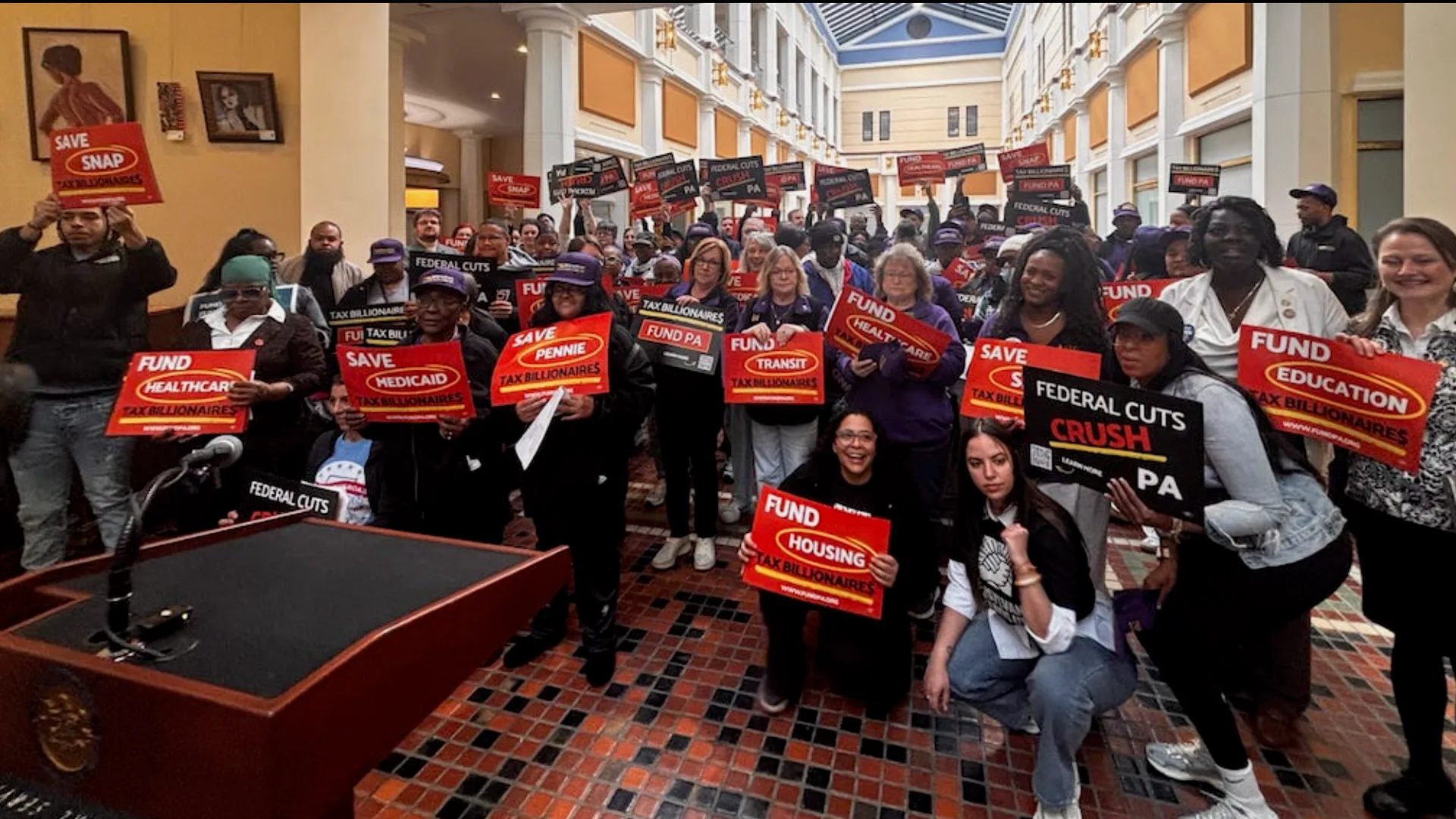
Photo: Pennsylvania Stands Up
Ditto for state trifectas. Should we focus on winning a Democratic trifecta in Michigan, or should we allocate more resources to flipping Pennsylvania, which is a heavier lift?
It is possible to miscalculate and go off the road in either direction.
The “1,000 Votes Test”
At MVP, we subject our grantmaking to the “1,000 Votes Test”: We focus our investments at any given time on whichever states and districts are most likely to be decided by a 1,000-vote margin.
We focus our investments at any given time on whichever states and districts are most likely to be decided by a 1,000-vote margin.
At this point in the cycle, we are making grants weekly (and sometimes even daily!). As soon as money arrives, we send it right back out to the voter organizing groups that could clinch that 1,000-vote margin. We adjust the dials on our portfolio in real time based on data from aggregated polling and conditions on the ground (which often change faster than polling can reflect!).
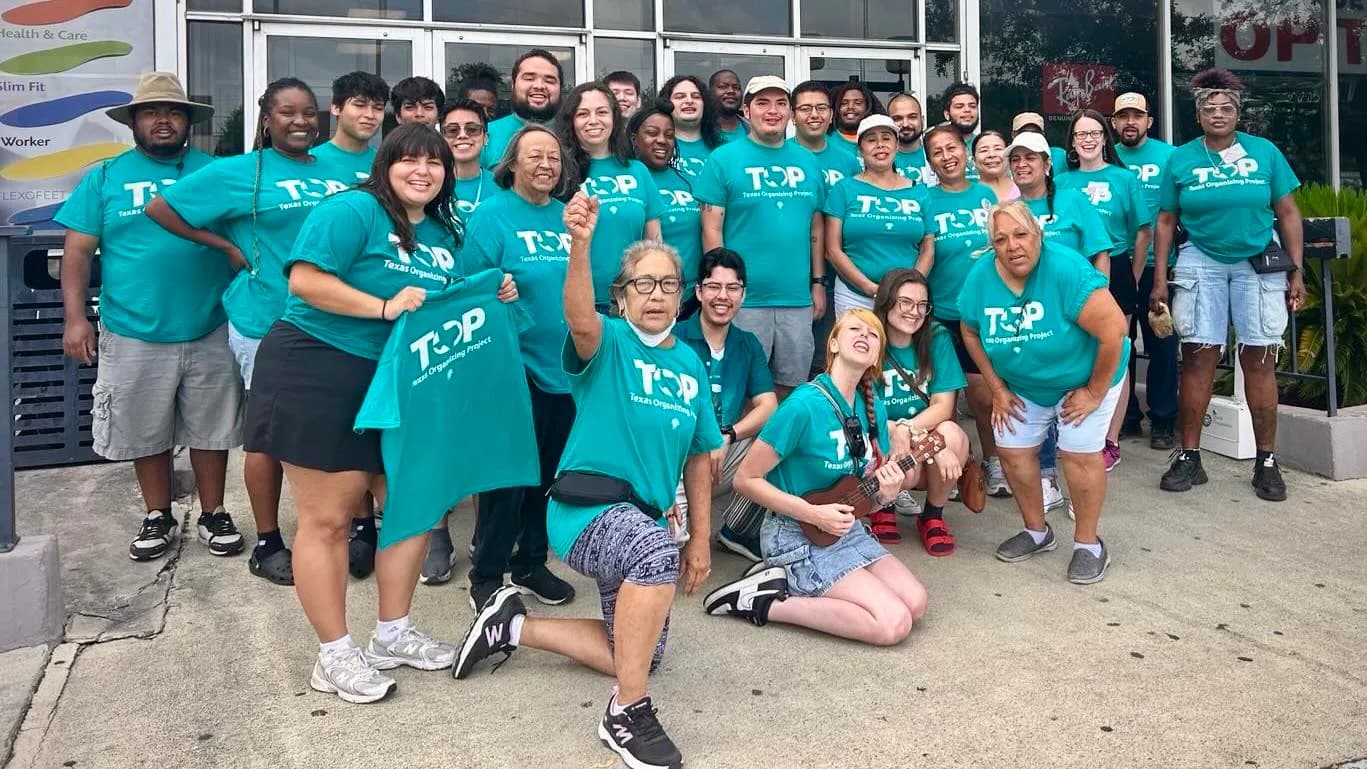
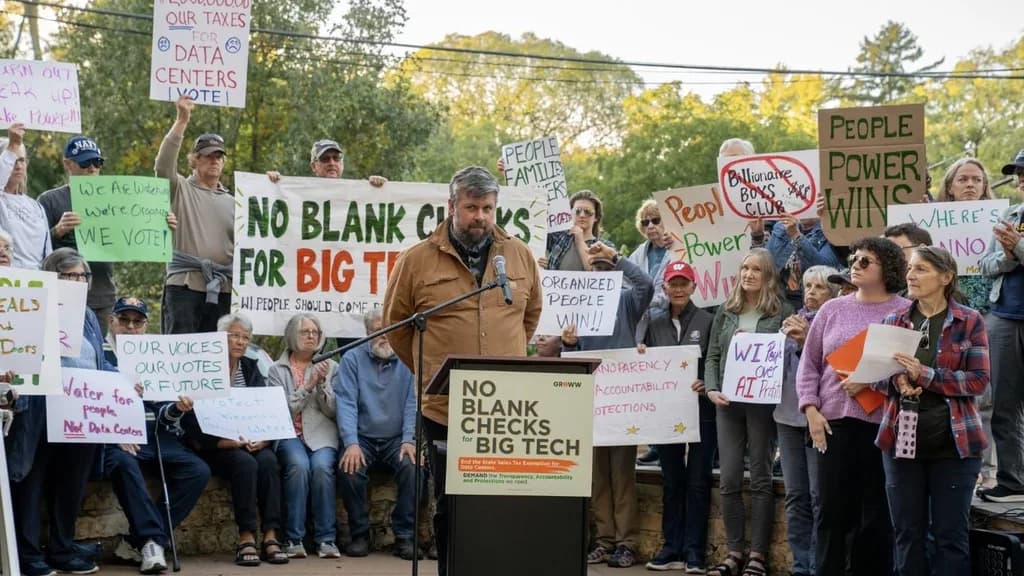
Photo: Texas Organizing Project
The safer and probably wiser thing to do is to focus our investments on states like Texas, Ohio, Alaska, and Iowa (and Maine, especially after the recent and concerning NYT/Siena poll). How terrible will we feel if we invest big in Kansas and Mississippi and end up losing Texas or Maine by 1,000 votes?
At the same time, the political environment is looking SO bad for Republicans (with gas prices expected to stay high or continue rising and Trump’s approval rating consistently in the toilet) that we could wake up on November 4 having won our core target states and come tantalizingly close (1,000 votes short) to winning our stretch states too. In that scenario, we will be kicking ourselves for being too risk-averse and not having invested more in the stretch states.
What does the polling tell us?
Here’s a quick glance at aggregated polling in four of our top Senate states — Texas, Iowa, Ohio, and Alaska — via Silver Bulletin:
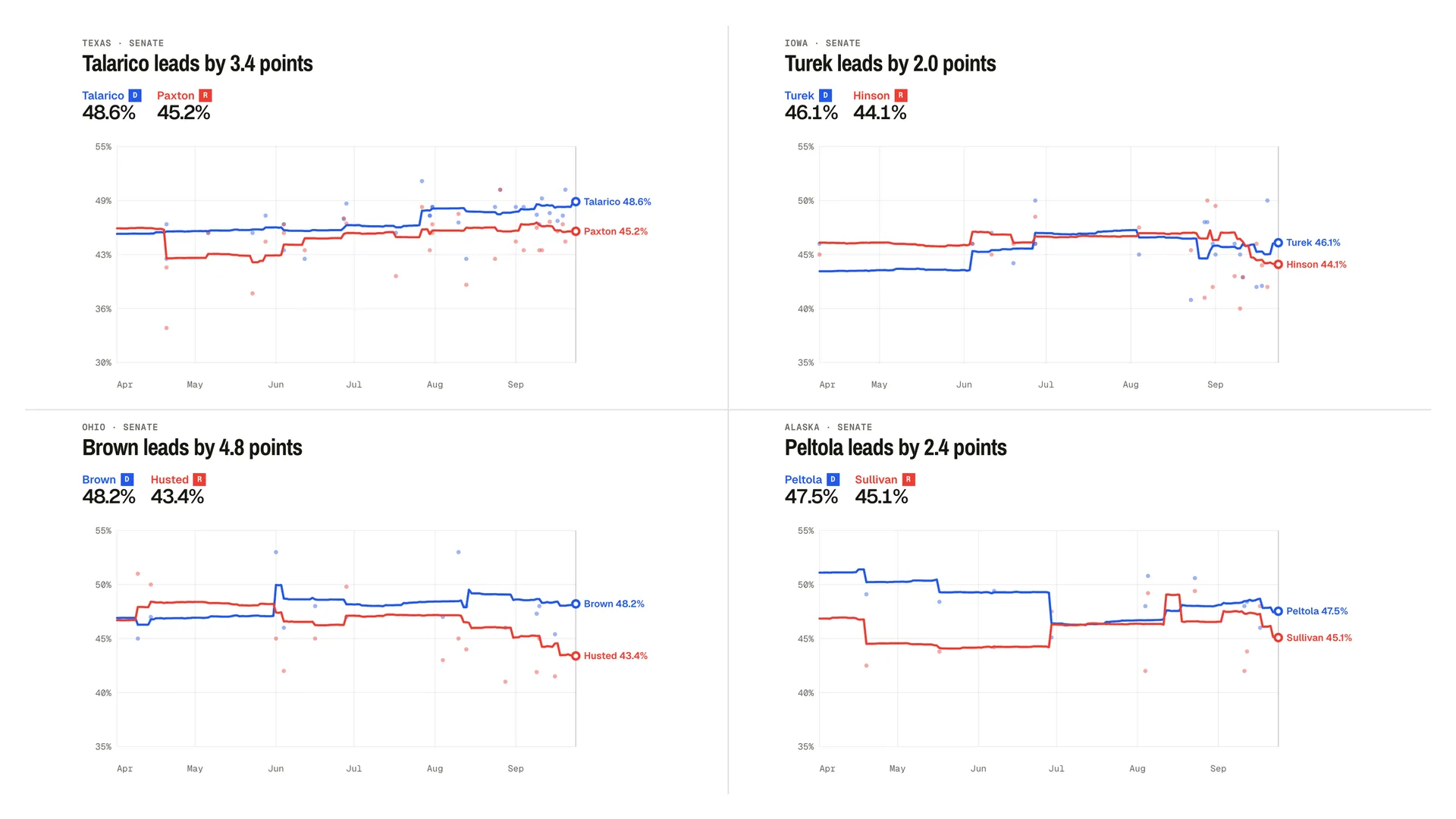
Graphics: Silver Bulletin, U.S. Senate Polling Averages as of 9/24/2026.
Here’s what it looks like in Kansas, Nebraska, Florida, and South Dakota (they’re missing data on Mississippi, which is in a similar ballpark). It’s important not to overread the significance of these polling charts (which are typically based on just a few polls each).
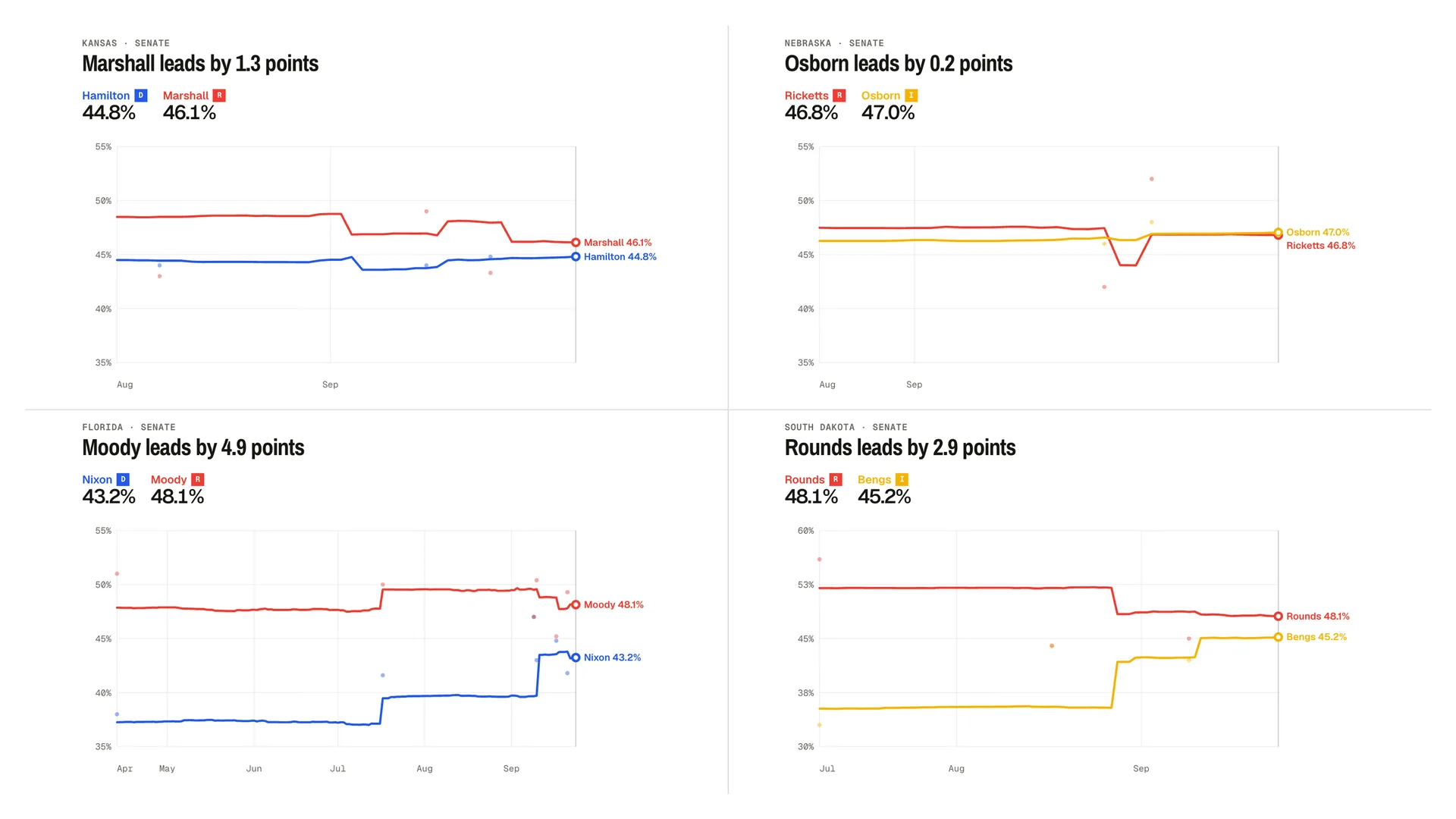
Graphics: Silver Bulletin, U.S. Senate Polling Averages as of 9/24/2026.
What is the best way to make such impossible decisions?
First, we study all the factors.
The other side has hundreds of millions more in dark money, so that’s likely to blunt our momentum a bit. And there could be all kinds of October surprises — good and bad — and we have to be vigilant and take nothing for granted in gaming out how we will need to defend the election. That means there are real reasons to be more conservative in our projections.
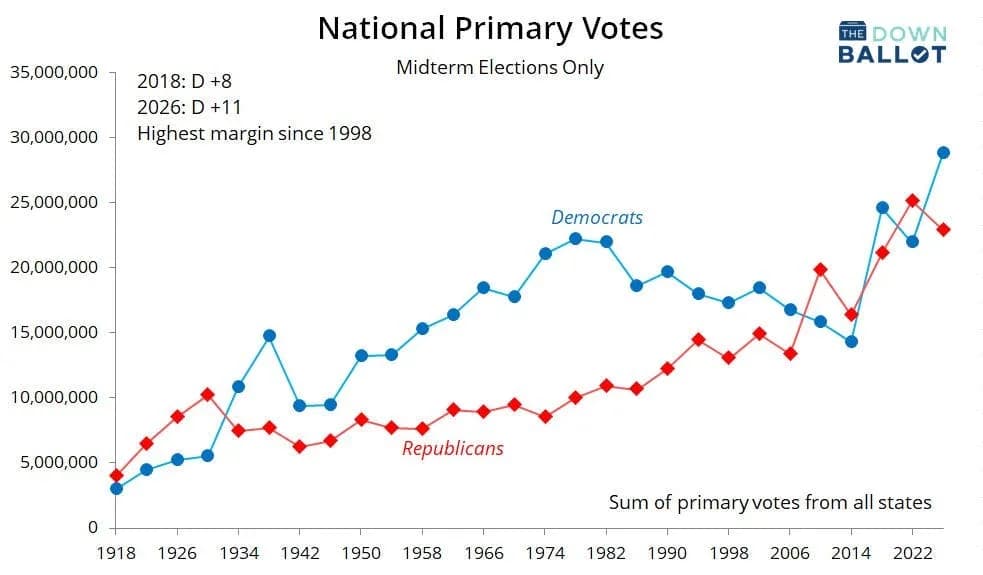
Graphic: The Downballot, “Massive primary turnout points to biggest year for Democrats since Watergate”, 9/22/2026.
However, if Democrats have a huge enthusiasm advantage in November, as they have for the past two years of special elections, then none of these races are off the table. An interesting longitudinal analysis points to a close correlation between partisan primary turnout and general election turnout — another data point that looks good for us.
Where is the next marginal dollar likely to make the biggest impact?
In the final stretch, here are the factors we are wrestling with as we advise donors and make these tough grantmaking decisions:
- What is the overall trend nationally? (It’s looking better and better! 😁)
- How close is each of the races likely to be? (based on aggregated polling, candidate quality, on-the-ground analysis, and other qualitative factors).
- What is the money situation in each of our core target states vs. stretch states? Where is the next marginal dollar likely to make the biggest impact?
“Mo’ Money, Mo’ Senate Flips”
We wish we could fill all the gaps, but with limited resources, we have to make tough decisions.
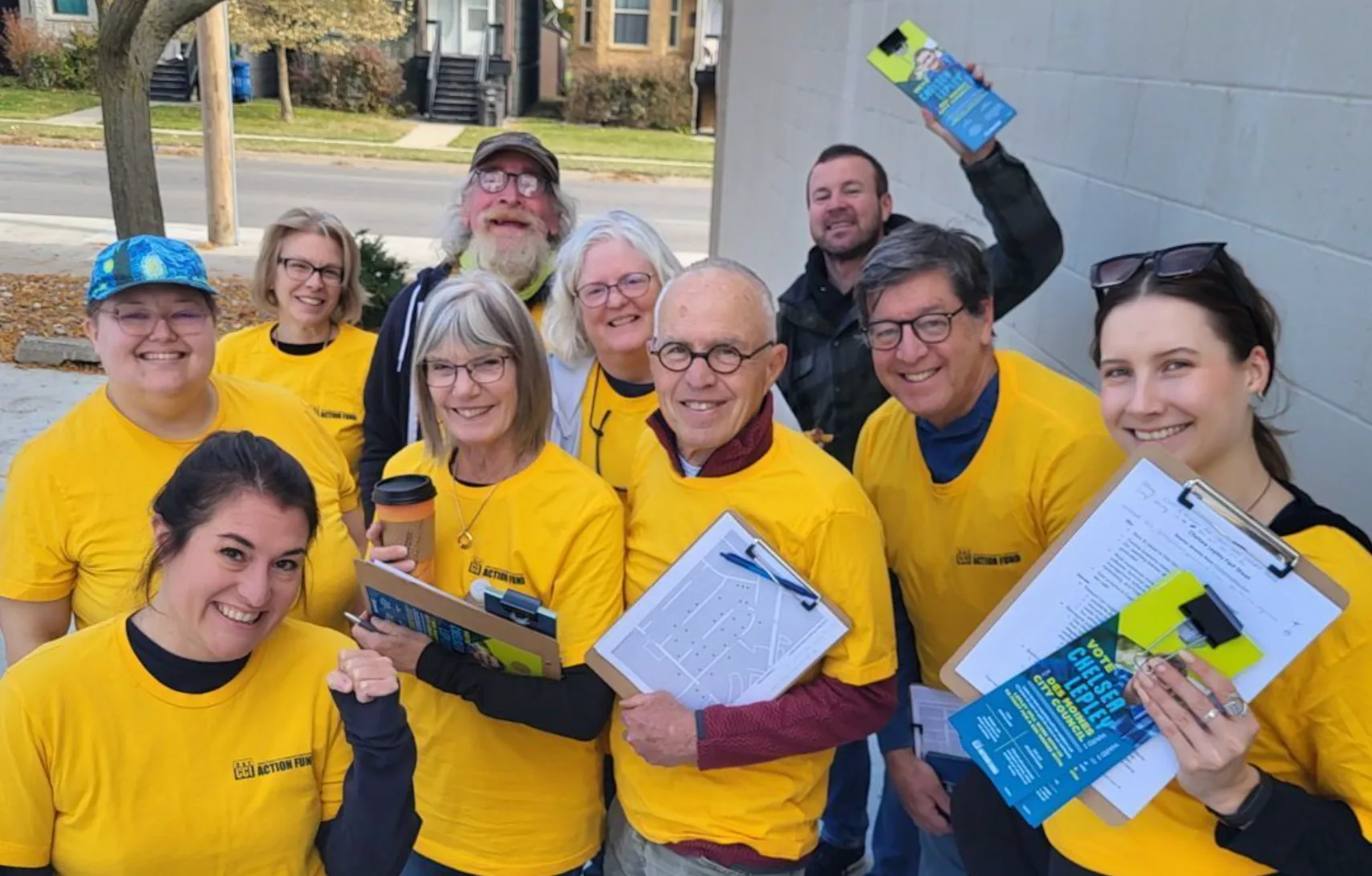
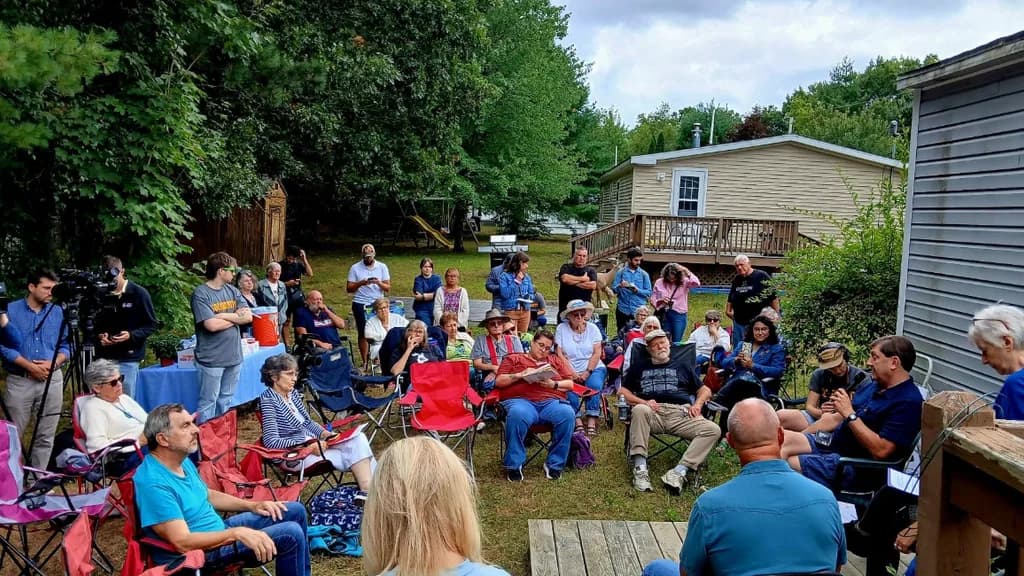
Photo: Iowa Citizens for Community Improvement (CCI) Action Fund
Two weeks ago, we were overindexing our portfolio on Texas, Ohio, and Iowa. Last week, we started adding a little more Kansas into the mix. As we make progress toward filling gaps in our core states, we’re likely to invest more late money in the stretch states.
The more money we have, the more we can invest in both our core and stretch states to help turn a Blue Wave into a Blue Tsunami.
The bottom line: We are hedging our bets, and the more money we have, the more we can invest in both our core and stretch states to help turn a Blue Wave into a Blue Tsunami.
So the moral of the story is that more money is needed. But I thought it would be interesting to share our internal process with you so you understand how and why we are making these decisions.
Your turn: What’s your political investment risk tolerance?
We’re still curious whether you would like to see us be more bullish or more conservative in our approach. Take our poll to let us know!
POLL: Where should MVP invest more in the Senate?
We are interested in hearing your thoughts on where you would like to see us invest more — using the Senate as a proxy.
Do you want to see us err on the side of:
- CAUTIOUS: Over-index on shoring up Michigan and New Hampshire.
- TOP FIVE: Focus almost entirely on Maine, Iowa, Alaska, Ohio, and Texas.
- BULLISH: Over-index on Kansas, Nebraska, Mississippi, Florida, and possibly others.
- BALANCED: Focus on the Top 5, but still invest significantly in the others.
In the most ideal scenario, we could invest in all of these states, but right now, the funds just aren't there. As the ultimate stewards of your money, we want to know what you would prioritize. Having your input will be helpful as we make our finish-line funding decisions based on where we think our investments can have the greatest impact.
Take the poll and share your thoughts!
Yours in winning,
Billy Wimsatt, MVP Executive Director
(On behalf of the MVP team)
p.s. - Also … LAST CALL for donations! You can give online or check out all methods here.
###
9/26/2026: Editor's note: An earlier version of this piece referred to the U.S. Senate races in North Carolina and Georgia as “slam dunks.” This has been corrected to reflect our more nuanced assessment.