Many of us have been working our tails off since early 2025 to make this election a turning point in the nightmare we have been living through.
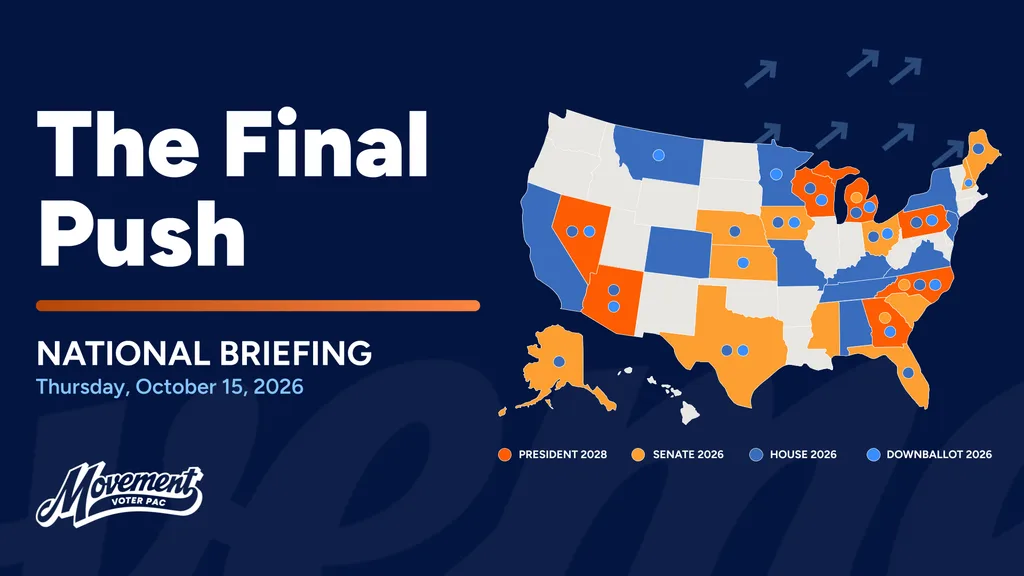
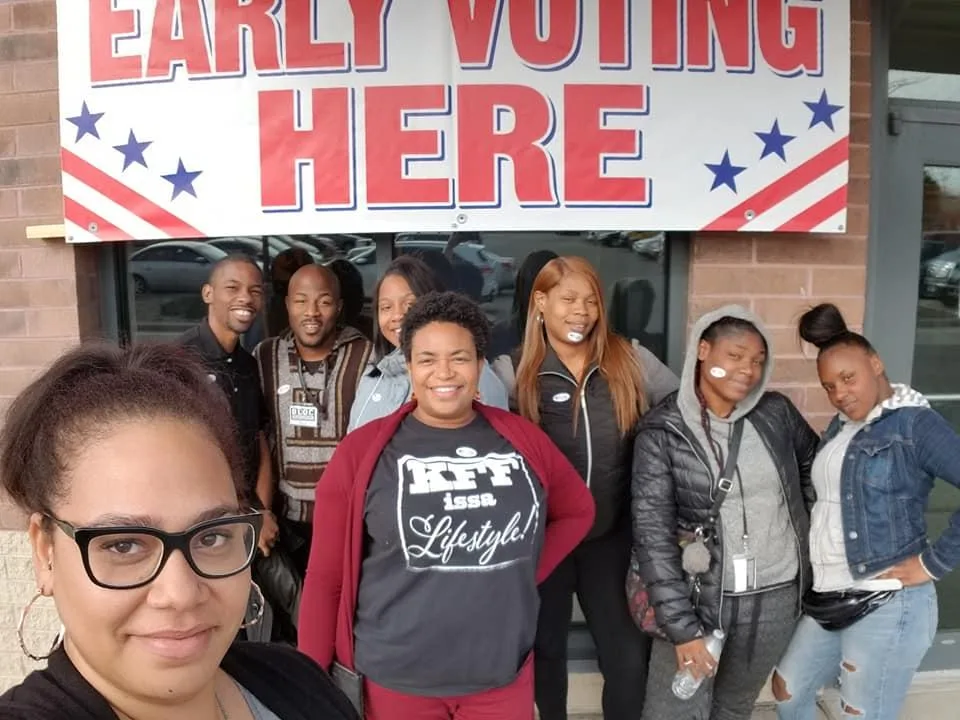
Between now and November 3, our job is to get as many of our people out to vote as humanly possible (get involved here). Hopefully, despite being vastly outspent, we will sweep the midterms in a blowout of historic proportions that is too big to rig.
Starting on November 4, we will have a new set of opportunities and questions. Here are ten big questions to think about after the election — and some quick early thoughts on each of them:
- How will we defend the results of the election?
- What policies can MVP partners win in new trifecta states?
- What’s our compelling agenda for 2029?
- Oyyyy! The Democratic primary … what can we do?
- How do we fix the Democratic Party?
- How do we maximize 2027 for movement R&D?
- How do we compete in media and tech?
- What do we do about the oligarchy?
- What do we do about AI?
- How can we build a better money machine?
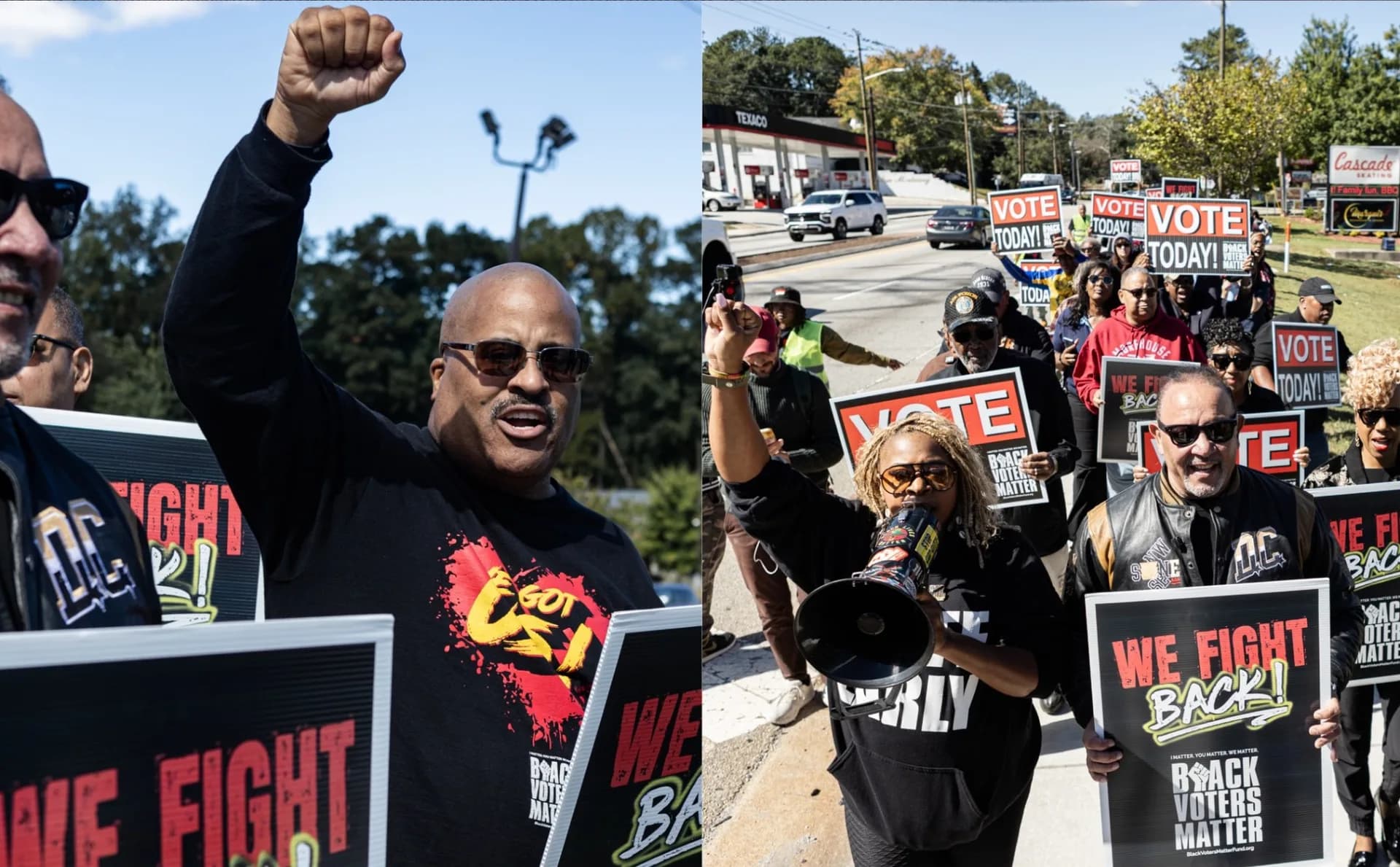
Photo: Black Voters Matter Fund at a No Kings Vote Early Atlanta rally and march to the polls.
1. How will we defend the results of the election?
Assuming we win a lot of big elections on November 3, the first thing we have to think about on November 4 (unfortunately) is securing the election results, ensuring elections are certified (in December), and making sure duly elected officials are seated (on January 3).
Movement leaders have workshopped 18 potential threat scenarios, stand ready to respond, and have been trained on how to nonviolently escalate if necessary. MVP and so many of our partners will be watching hotspots for any sign of impropriety and will be ready to respond in real time — see this plan from our grantee partner, Seed the Vote, as just one example.
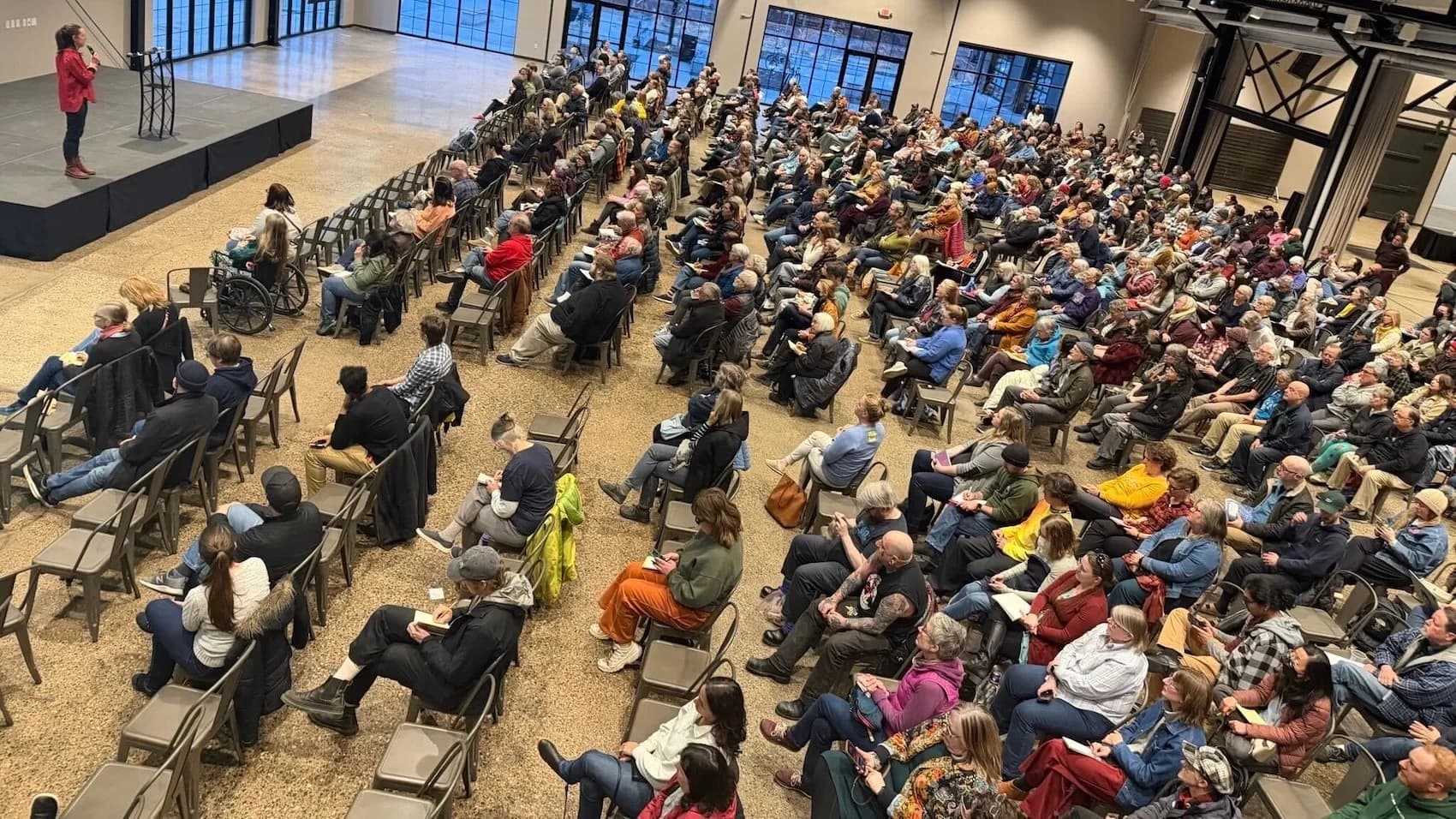
Photo: A packed Unidos MN election protection training in April 2026.
At the highest levels, Trump cronies are saying the quiet part out loud. Just this Thursday, Attorney General Todd Blanche said publicly that the DOJ would not rule out trying to block states from certifying results.
In states like Ohio, election results should be tallied on election night. If Democratic U.S. Senate candidate Sherrod Brown wins, he should be sworn in as a senator immediately after certification in December because he'd be replacing an appointee to fill the seat JD Vance vacated. But Ohio Secretary of State Frank LaRose is an election denier. And Mitch McConnell’s health is questionable. So if Brown wins Ohio, this could be one of the first indicators of whether the certification and seating process is working properly.
In states like California and Alaska, which can take weeks to count votes, we need to be extra vigilant to ensure all votes are counted, and results are reported without interference. Already in Alaska, the DOJ is preemptively suing to block certification — if GOP Senator Dan Sullivan narrowly loses.
All to say: If there is major election interference, it will consume our attention and delay our focus on the next nine questions, which are more forward-looking.
2. What policies can MVP partners win in new trifecta states?
In an optimistic scenario, Democrats could pick up trifectas in five or six states, including Minnesota, Michigan, Pennsylvania, Arizona, and Nevada. In some states, bills for the 2027 legislative session need to be figured out as early as December, which means sitting legislators are going to be sprinting to negotiate and file bills in the immediate aftermath of the election.
Think about the amazing Minnesota model where in 2023, legislators passed the most progressive raft of legislation in the entire country in generations — in just 90 days — in partnership with MVP partners. In states like Pennsylvania and Arizona, where Democrats have been locked out of power for decades, legislators are going to need a lot of support to take full advantage of the opportunity — and in many cases will be struggling with elements in their own party who are corrupted by monied interests and/or entrenched in the status quo.
The six-month period after the election will be a key window for MVP partners to make their voices heard, counter special interests, and get bold, popular legislation passed at the state level — on clean energy, affordability, wages, democracy reform, criminal justice reform, abortion, LGBTQ+ rights, worker protections, guardrails against autocracy, and so much more!
This is a huge opportunity in the near term.
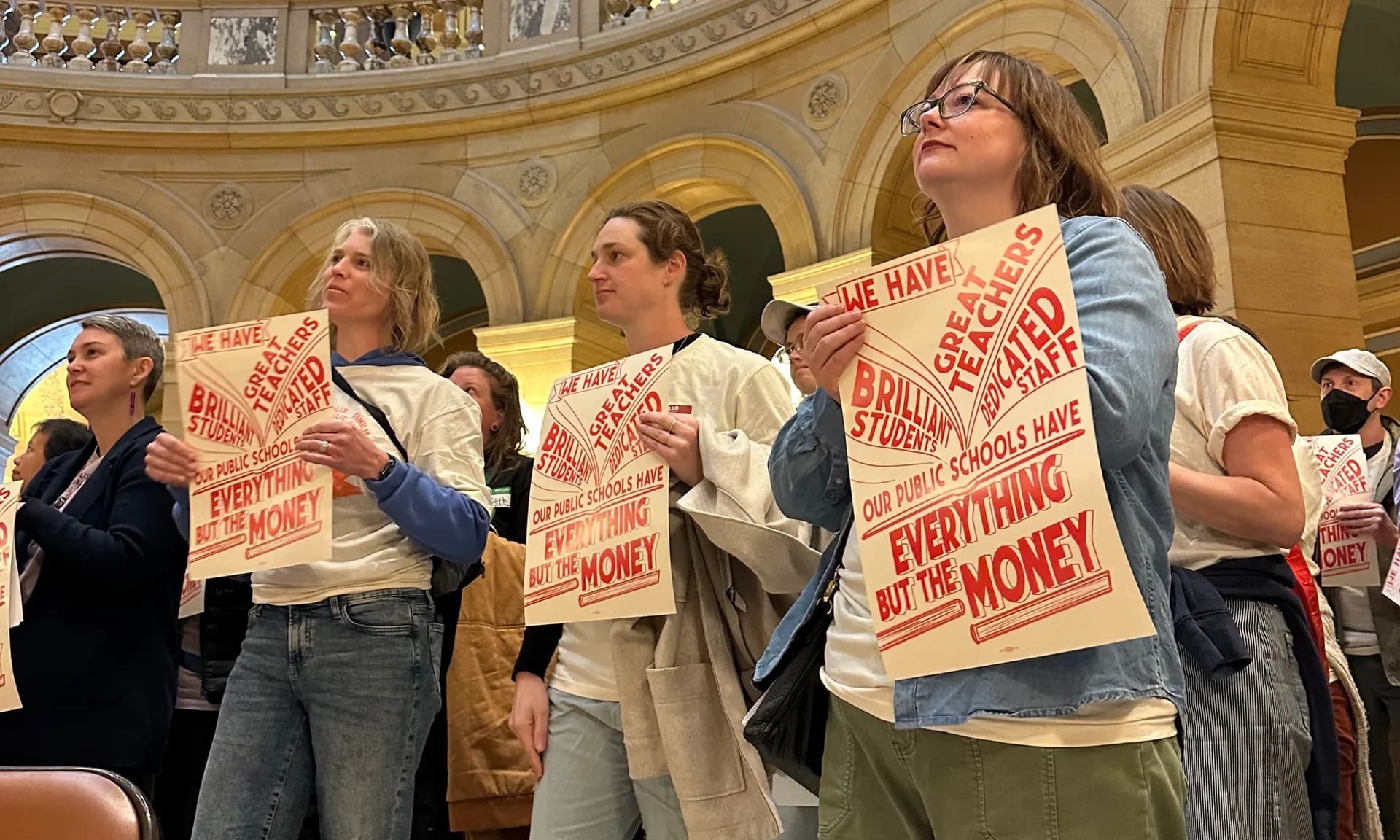
Photo: TakeAction Minnesota parents with Minnesota Families for Public Schools rally in the State Capitol rotunda.
3. What’s our compelling agenda for 2029?
If Democrats win back power in 2028, there will be a huge amount to do to repair the country, and govern in a way that addresses the level of crisis in people’s lives — from shared prosperity to democracy reform to clean energy to AI regulation to repairing and upgrading the federal government.
Increasingly, Democrats are feeling cautiously optimistic about the potential to win a trifecta in 2028 (hopefully mirroring the 2004 to 2008 cycle as a historical precedent with some similar dynamics). After witnessing Republicans’ aggressive Project 2025 agenda, many have been asking, “Where’s our Project 2029?” A handful of think tanks have been developing policy ideas to propose to members of Congress, presidential candidates, and would-be cabinet members to create a Democratic agenda for 2029.
The legislative sweepstakes begins in 2027. Democrats need to pass bold legislation (which Trump will veto) to show the American people how they will make their lives better if they win in 2028. The federal policy push begins in early 2027 with congressional legislation to provide a model for 2029.
We need a major effort to meta-organize a package of policies that Democrats can pass — and tell a compelling story about — in 2029. In other words: We need to get the whole progressive movement and big-tent Democratic coalition in formation now, behind a far more compelling vision for our country’s future than we have ever collectively put forth.
If we are lucky enough to win in 2028, the 2030 midterms will soon be breathing down our necks, with a likelihood of repeating the historical pattern of punishing the incumbent president’s party. 2030 will be followed by the 2032 presidential election. In short: 2029 is our best bite at the apple to reform the system, deliver for the American people in a way that is huge and legible enough to defy the odds, as we did in 2022, and break this cycle.
If we fail to deliver big in 2029, we could be right back where we are now — or worse — which leads to the big question on everyone’s minds …
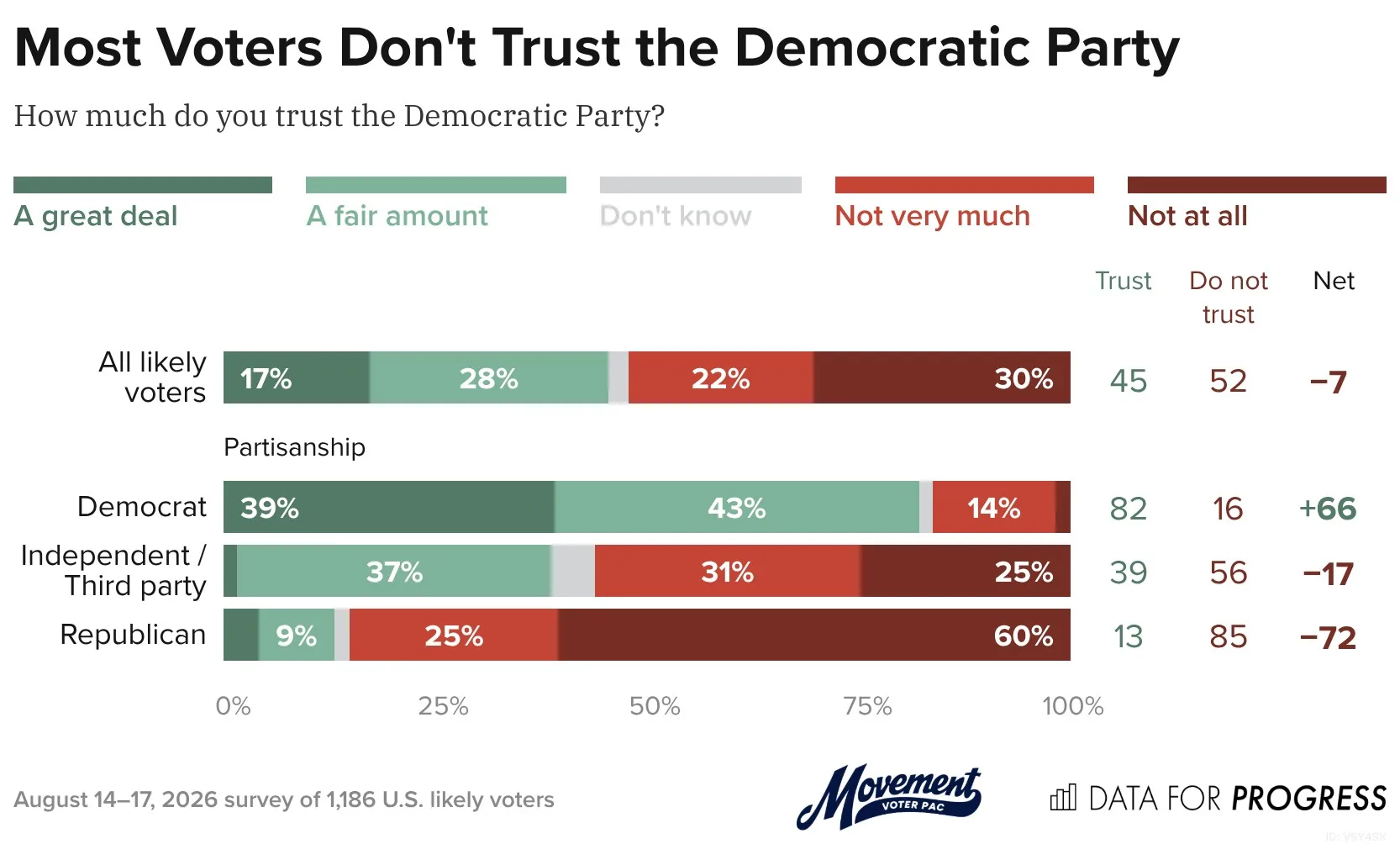
Graphic: Data for Progress poll, August 2026
4. Oyyyy! The Democratic primary … what can we do?
The Democratic primary … I feel exhausted just thinking about it.
Starting in just a few weeks, we will begin hearing announcements of exploratory committees. For the next 18 months, we’ll be in full swing. We know many of the potential entrants: Harris, Pritzker, Shapiro, Buttigieg, Whitmer, Ossoff, Newsom, Beshear, Wes Moore, Ro Khanna, Rahm Emmanuel, Ruben Gallego, Mark Kelly … and likely the biggest X factor of them all: AOC.
Campaigns will compete for big and small donors, campaign talent, viral moments, and to create field operations in the early states: South Carolina, Nevada, New Mexico, Michigan, Virginia, and possibly New Hampshire. The new lineup will favor candidates who can build war chests and grassroots armies across a diverse array of states.
How should we show up in the Democratic primary? As MVP, our orientation will be to “keep the family together” through what will almost certainly be a divisive primary, and help to unite everyone around the eventual winner — while sending as much funding and support as we can, as early as we can, to year-round organizing groups in every 2028 battleground state.
The Democratic primary has the potential to be exciting and transformational. Let’s make it so! Our goal is simple: to nominate the leader who is best suited to win, govern boldly, and communicate effectively in this brave new media age. We don’t get to choose the eventual nominee, but we can create a strong foundation to help them to succeed — before, during, and after Election Day.
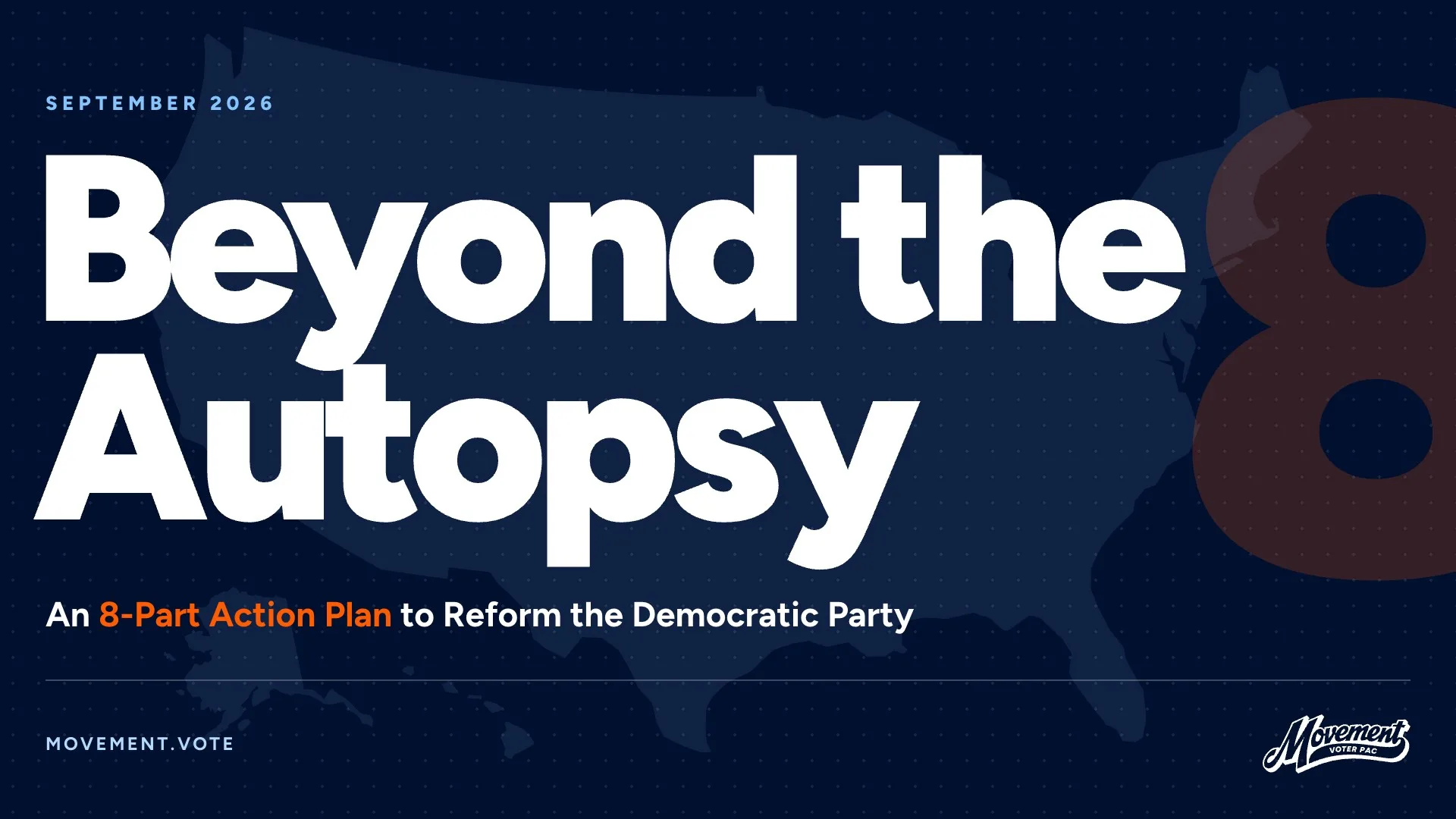
Graphic: Beyond the Autopsy, a report on MVP’s action plan to reform the Democratic Party.
5. How do we fix the Democratic Party?
The Democratic Party needs work (to put it mildly). Part of the challenge is that what passes for the Democratic Party at the national level is less a democratically run political party than an unholy alliance of major donors, parasitic consulting firms, and Schumer-Jeffries types who have risen to the top by mastering the rules of the inside game. Even the Democratic National Committee (DNC) itself has limited impact — beyond running presidential primaries. For instance, the DNC has no say over what the Congressional committees like the DCCC or DSCC do.
We interviewed more than 100 Democratic Party insiders in our recent report Beyond the Autopsy: An 8-Part Action Plan to Reform the Democratic Party. We are in conversation with allies about how to make this plan real — in both a bottom-up and top-down way. Many of the biggest changes involve money and trust — especially with young voters and communities of color. We are developing plans with allies to root out corrupting influences and push for a series of structural reforms.
In addition to partnering with organizations to fix the Democratic Party, we will be making the case to Democratic presidential candidates that running on a platform to reform the Democratic Party is good politics as well as good policy.
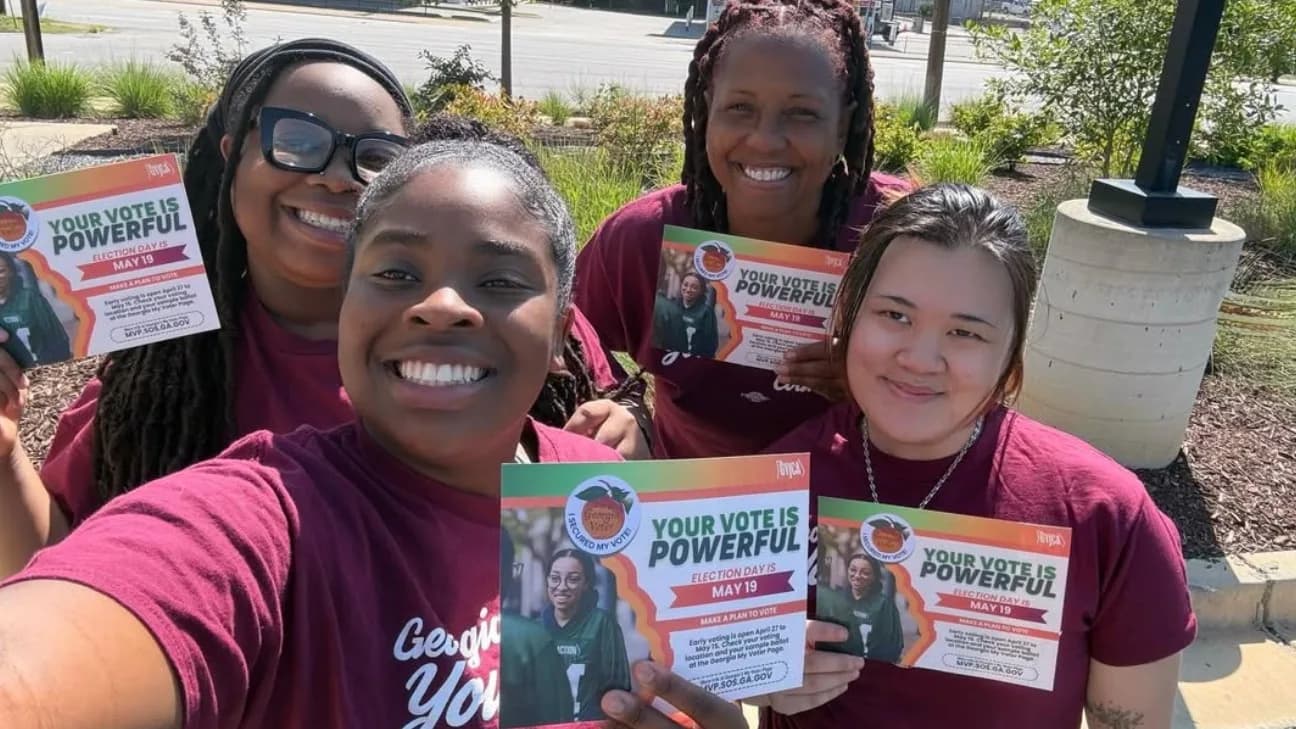
Photo: Georgia Youth Justice Coalition canvassers ahead of the May 2026 primary.
6. How do we maximize 2027 for movement R&D?
2027 is the critical year to invest big in R&D (Research and Development) to strengthen the progressive and Democratic ecosystem. And that doesn’t just mean tinkering around the edges with tech tools and randomized control trials to optimize around electoral tactics.
Honestly, so much of how we do politics and civic engagement comes from on models that need a complete reimagining. We need politics to be more relational and culturally relevant. Think: Mamdani or, from a different place on the ideological spectrum, Josh Shapiro or Marie Glusenkamp Perez. Whether you like them or not, they are good at making governing feel relevant, responsive, legible, and relatable to their constituents.
And we also do need a much better and more holistic tech and data stack to match the needs of organizers to do actual movement-building at scale. But even more importantly, we need visionary leadership and actual solutions people believe will make our lives better and solve the crises we face. This includes long-term futurist thinking along the lines of Democracy 2076 — we need an actual positive vision for the future we want to create.
Leadership! Solutions! Movement! Infrastructure! Collaboration! Visioning! We have a lot of innovating to do on multiple fronts. We need: Experiments. Piloting. Scaling. Adaptation, Adoption. Cultural change. These won’t happen overnight, and they won’t happen on their own. If we want to be in a truly different place in 2029, then 2027 is the year to invest big in experimentation and piloting all the things we need to figure out in order to operate differently in 2028 and 2029.
Otherwise, we’ll just keep doing the same ol’ same ol’, and that won't get us where we need to go.
7. How do we compete in media and tech?
We have huge work to do in media and tech. In the wake of 2024, there was a broad recognition that we were getting killed in digital media. While Democrats stupidly invested billions of dollars in TV ads, the right wing invested in building media companies and elevating influencers with millions of followers, all of which generated revenue. While our side bought ads on TV and Meta, they built up a vertically integrated meta-church that outperformed the Democratic coalition.
In 2025, we began to learn the lesson. Democratic funders invested more in media than ever before (though still modestly in comparison to the right). By 2026, we began to gain some semblance of parity with platforms like More Perfect Union (which MVP proudly funds). And we caught a lucky break: the president who led the right-wing cultural movement screwed the American people (and his own base) so badly that he undermined the cultural power and legitimacy of his movement online.
MVP and our allies are building out our media strategies to try to meet the moment, but we are still far outmatched. This is arguably where our side will need to make the biggest investments to counter the huge imbalance in media and tech ownership. Lots to figure out!
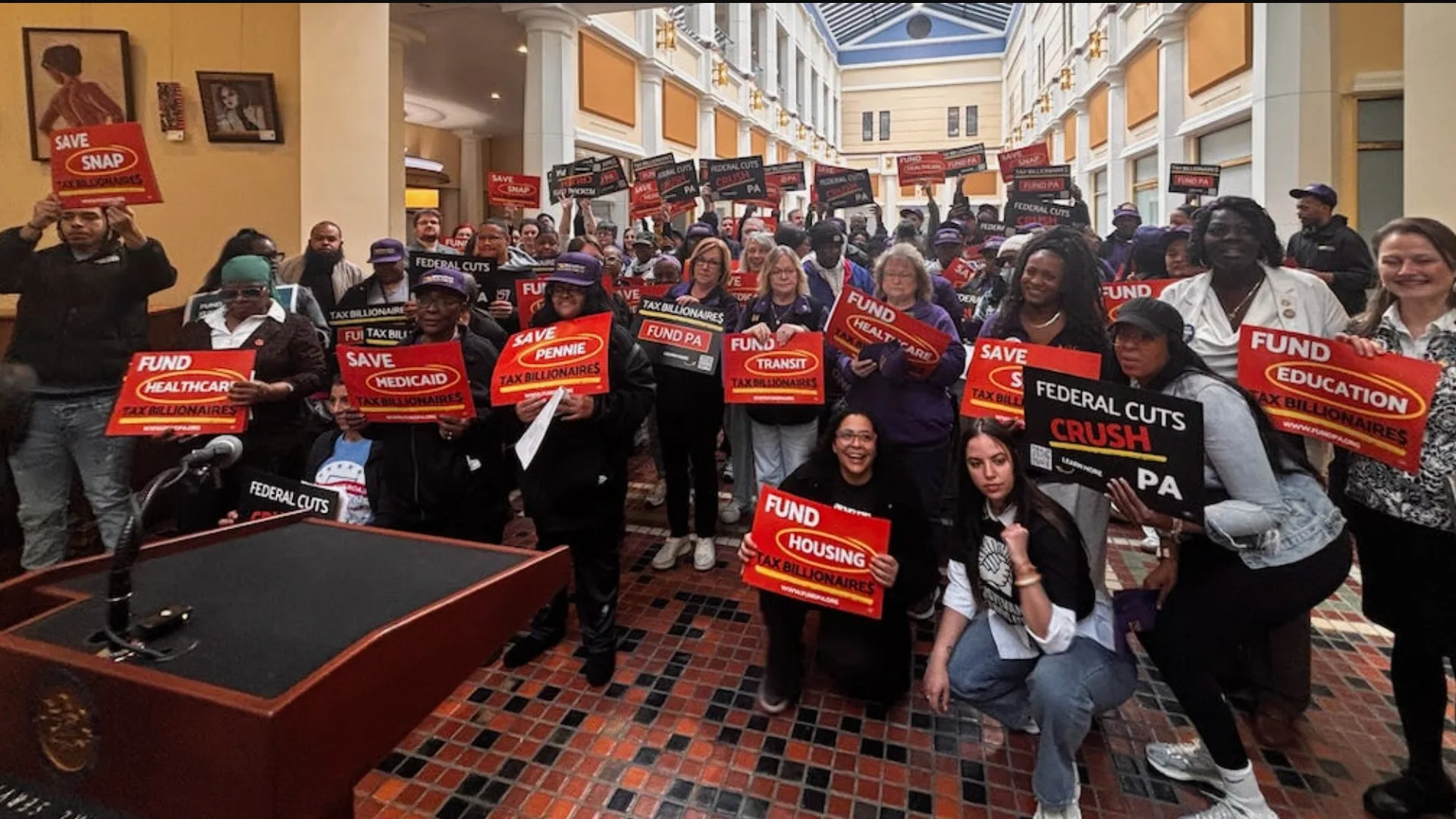
Photo: PA Stands Up members at their 2026 member convening, calling on lawmakers to tax billionaires.
8. What do we do about the oligarchy?
Look, we have no problem with people being financially successful and making money in America. If someone wants to have six houses and seven yachts, they should pay their fair share of taxes and not exploit workers, but whatever — this is America — it’s fine. However, at a certain point, someone like Elon Musk becomes so wealthy and powerful that he poses not only a threat to democracy and to Americans; he becomes a national security threat as well.
We have a gigantic and accelerating problem of oligarchy wherein a handful of ultra-billionaires control most of our media, tech, access to information, means of communication, means of warfare, surveillance, and control of major industries. And they are attempting with some success to control our politics and democracy too — it is a modern form of tyranny that will only be accelerated by AI. Increasingly, a subset of “dark enlightenment” Neo-Reactionary movement (NRx) trolligarchs are talking openly about creating their own dystopian corporate fortressed mini-countries for billionaires and their friends to wall themselves off from the rest of us so they can control us and protect themselves. Scary stuff.
We are hitting a tipping point, and we need to create both the political will and public policy in 2029 to curb the increasingly aggressive power of the Musk class to endanger America and all of us. No Kings shouldn’t just apply to political figures. Tyranny can come from private sources as well. No one person or company should have that much power over us, and we need to pass policies in 2029 to protect ourselves and our country. A Democratic trifecta at the federal level must prioritize campaign finance reform, tax reform, antitrust enforcement, and workers’ rights to begin to shift the balance of power.
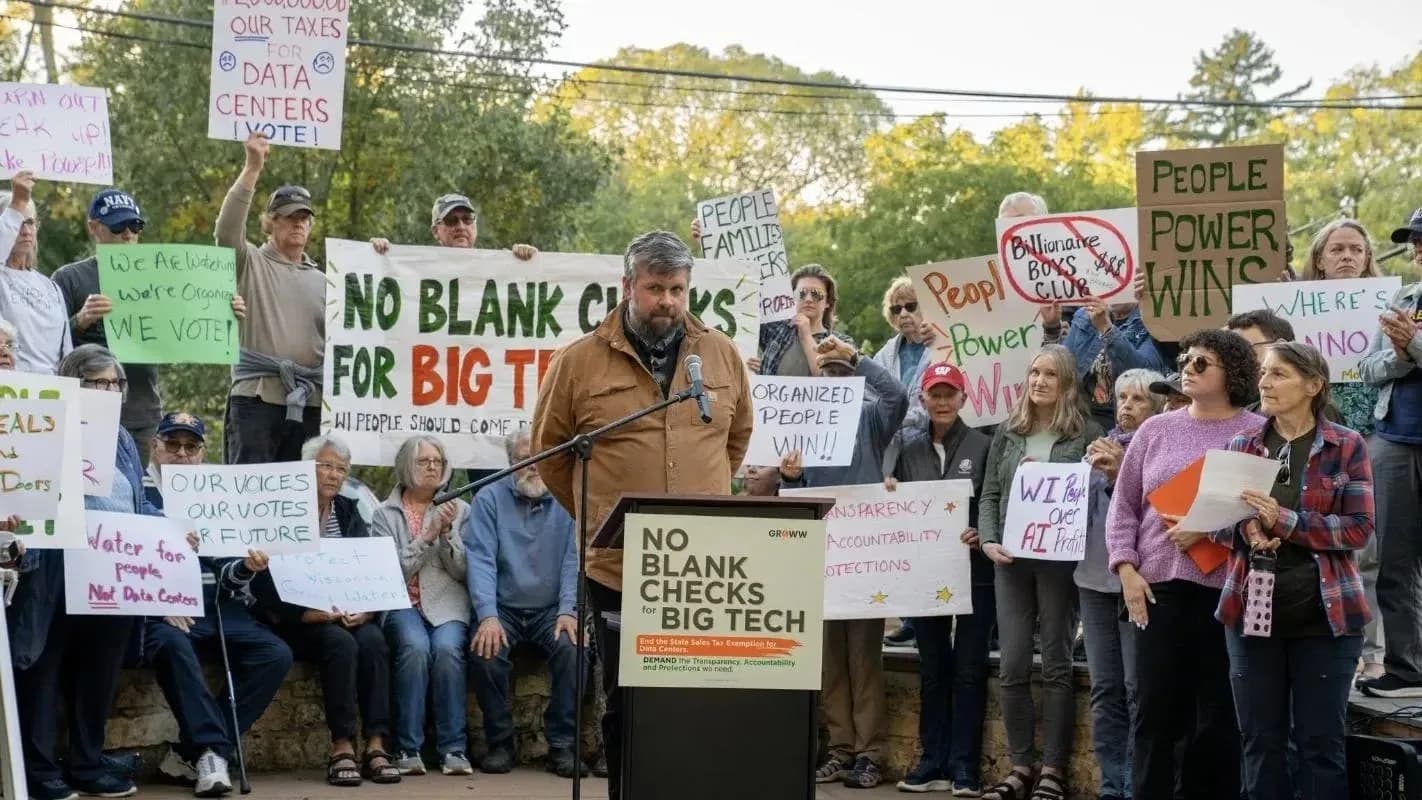
Photo: MVP partner GROWW (GrassRoots Organizing in Western Wisconsin), “No Blank Checks for Big Tech” rally, 9/24/2026.
9. What do we do about AI?
AI is perhaps the trickiest x-factor of all. The genie is getting out of the bottle, and soon AI will be near-impossible to control — with an incalculable impact on jobs and work as we know it, not to mention water, climate, human intelligence, international security, and the overall well-being of people and the planet. The whole thing can feel completely overwhelming.
Still, there's a lot we can do. The rapidly growing fields of AI safety, ethics, and advocacy are developing solutions at all levels, many of which involve policy and regulation. The idea of “small AI” — how to use AI for human good, in sustainable ways — is one worth exploring. As is so often the case, much of the change is being driven by organizing.
Here are the things we can do — and they are somewhat in tension:
First, we need to build a political movement to put guardrails on AI and data centers. From organic local data center organizing to the AI Pact candidate pledge to new efforts like Irreplaceable organizing national AI walkouts to political interventions like Guardrails Alliance, a movement is brewing to regulate AI for the greater good. (More on MVP and our partners’ work on AI right here.)
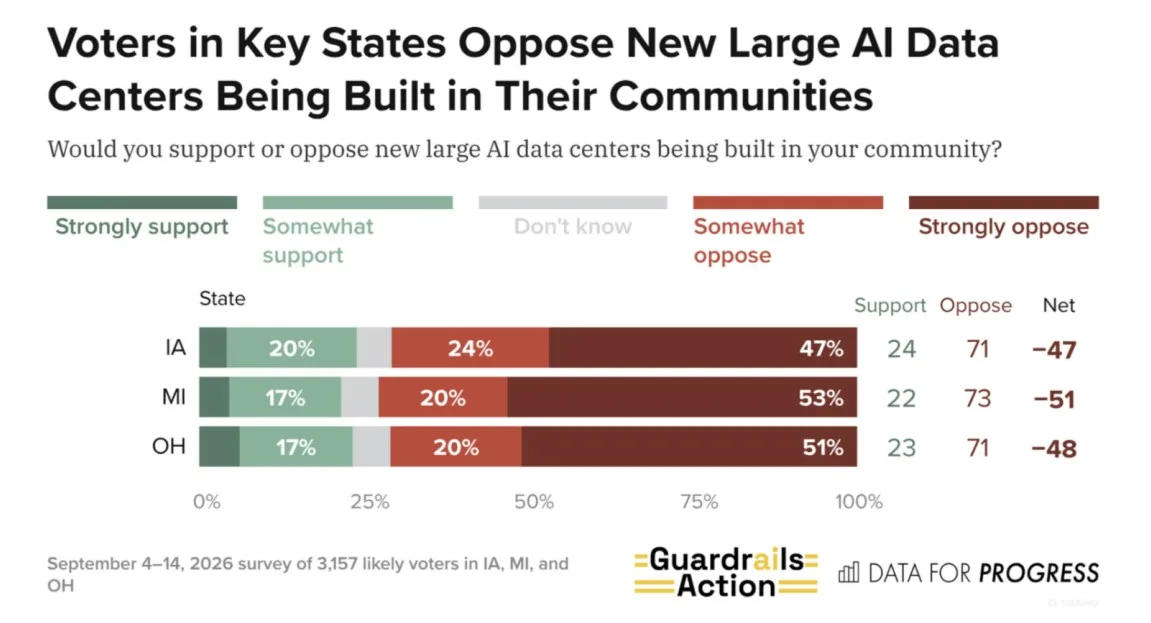
Graphic: Data for Progress and Guardrails Action
At the same time, like all new technologies, we as a movement and center-left political coalition need to figure out how to use it to advance our work, while setting limits on its misuse. As an example, within MVP we are both setting policies around it (such as being transparent about when staff uses AI to write or crunch numbers), and we are also experimenting with ways it can help us. We need to simultaneously keep up with the times while also figuring out, from a values perspective, how to set limits to put humans and our environment first.
The right-wing political machine is way ahead of us. They are using AI in deeply unethical ways, surprising no one. We need to figure out how we want to use it for good.
10. How can we build a better money machine?
I know money is an icky topic, but we have to talk about it. Structurally, we have to pass sweeping policies in 2029 to overturn Citizens United and limit money in politics. And simultaneously we need to build a better money machine to fuel all of the solutions we need and to out-compete the right-wing money machine. This needs to be a core pillar of our work in 2027, and there is a solution.
Every election cycle, Americans donate over a trillion dollars to charity (here are 2025 and 2026 figures) — presumably at least half of that enormous sum comes from Americans who want Democrats to win. For all the (valid) anger over money in politics, it is a drop in the bucket compared to how much people donate to the nonprofit sector as a whole; only about 1% as much goes to democracy and politics as to charitable nonprofits. The money we need to transform our democracy and our country exists — in vast quantities.
Collectively, we have plenty of money to out-compete Elon Musk. We just need to get better at helping donors channel their donations more strategically to achieve the outcomes we collectively want and need. That is why organizations like MVP exist — we need to improve and scale our craft.
On top of this, the Democratic Party has a parasitic spam-and-scam fundraising industry that siphons off and wastes most of the money it raises, enriching a profit-driven consultant class and alienating the Democratic base with horrible spammy texts and emails that make people absolutely hate politics. The system is broken.
The heart of the solution is to scale a volunteer-driven, peer-to-peer campaign of thousands of donors (at all levels) talking with millions of their peers about how and why to donate strategically to transform our democracy and our politics. (Here’s MVP’s Donor Organizing Program, as one of many promising examples.) In short, we need to hold hands and jump together to fund a campaign for a better future.
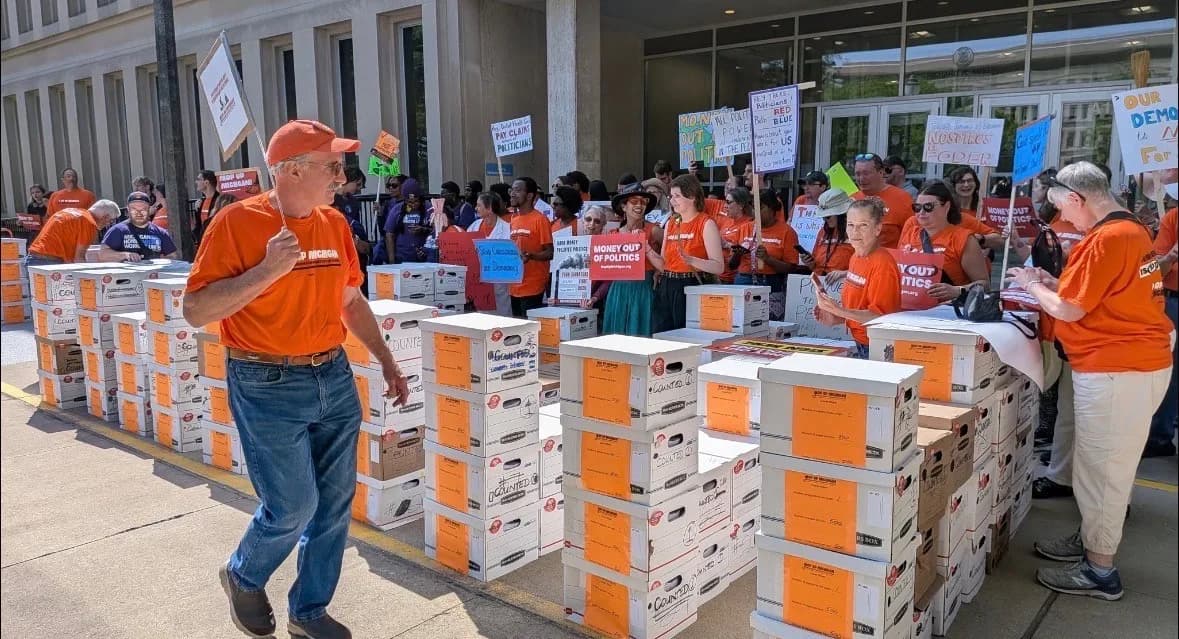
Photo: Michiganders for Money Out of Politics (MMOP) - Volunteers rallying with boxes of petitions.
So what’s the big plan to save the world? (in 3 years)
That was a lot… How can we solve all of these big problems at once?
The silver lining is that the crisis in people’s lives — and people’s level of existential dread — is so big now that we have the best chance we may ever have to make really big changes to fix things. There is an opportunity for us — if we seize it — to ride the anti-Trump, anti-status quo wave to win a huge governing mandate in 2029 to pass the most sweeping package of legislation in modern history.
In his new book This is the Plan, Ben Wikler talks about the next three years (2026-2029) as our “big bite at the apple” to save the world on multiple fronts at once. He’s not wrong. Here’s what it would look like to actually get it done.
In 2026, we win and create momentum. In 2027, we dive into all of the above bodies of work. We organize donors at an unprecedented level and create a bigger, better money machine. We fund a massive three-year overhaul of the progressive movement and the Democratic Party. We break the lobbyist and consulting class’ grip on Democratic politics. We create a bold agenda for 2029 that excites a growing generation of young voters. In 2028, we elect a Democratic trifecta with a mandate to reform the filibuster and pass sweeping changes in 2029. We win big on shared prosperity, democracy reform, and protecting us from the polycrisis (AI guardrails, clean energy, etc.). We limit the power of the Musk class to control everything. And we have a chance to pull ourselves back from the brink and make America better again.
I think we can do it.
Do you?
The MVP team and I would love to hear your visionary thoughts about how we can make this happen!
We are in an agile strategic planning process and trying to decide how big and bold to go in 2027 to get a running start towards making these things happen. It feels like our best chance to save the world. We look forward to connecting with you after the election and dreaming together about how we can make our big dreams come true.
Note: This was written by humans with zero help from AI, but with a lot of help from the MVP team, including Zo Tobi, Annie Lipsitz, Rachel Hill, Ottavia Lezzi, Betty Herschman, Sloan Leo Cowan, Alicia Jay, Kristee Paschall, and Kristen Summers.