Unless you’ve been living under an IBM DOS computer, you probably know that AI has become the hottest tech topic since Al Gore and Beyoncé invented the internet.
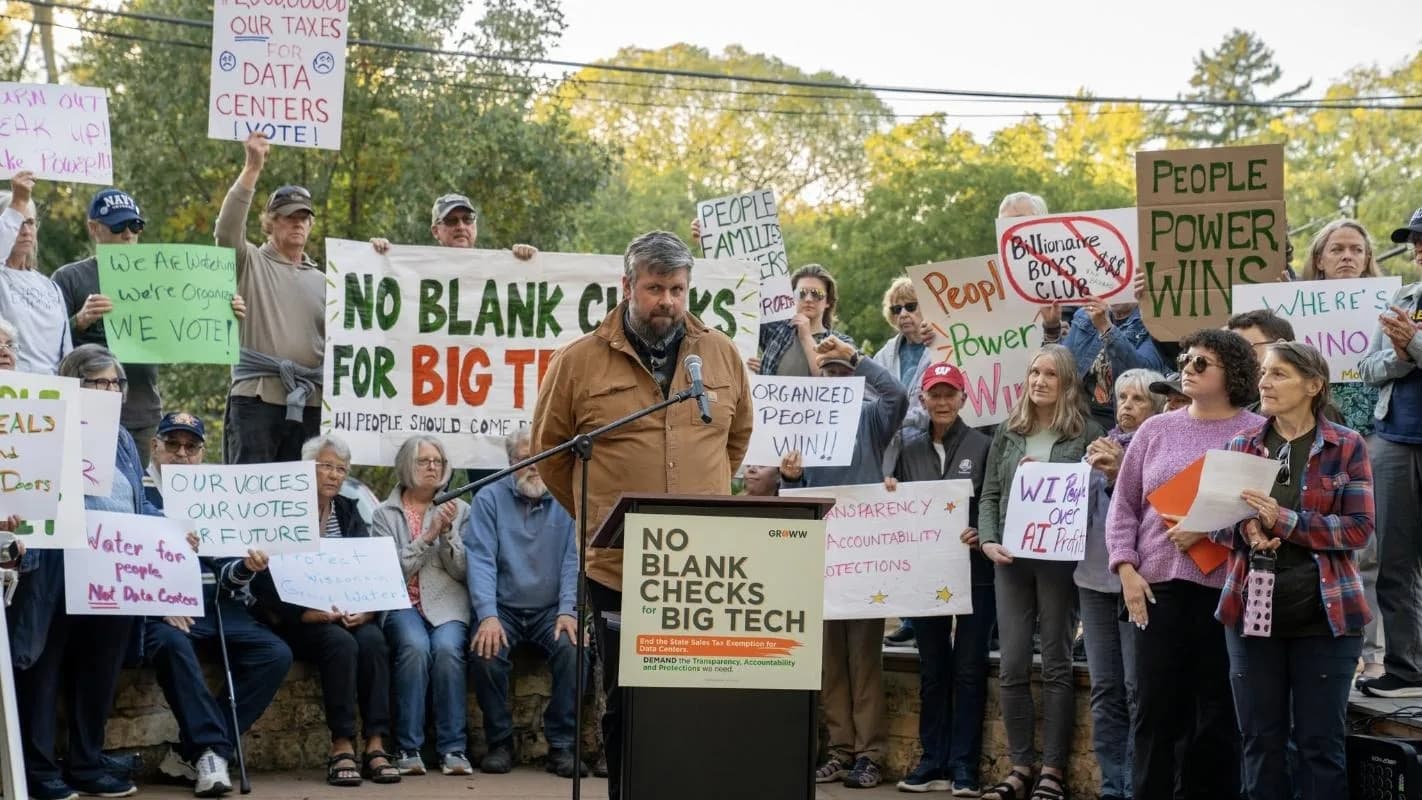
Data centers — and the fights against them — are popping up all over the country; AI CEOs have called for an “industry slowdown”; and Trump has declared his unabashed love of (read: financial interest in) AI.
MVP partners are helping build the beginnings of the mass movement needed to ensure AI’s benefits are shared and its threats averted.
AI is emerging as one of the most powerful and disruptive technologies in human history. While we can all acknowledge the potential benefits of AI, it is also the newest existential threat of our time. And, as with other existential threats (e.g., climate change, bioweapons), solutions will come from multiple sectors, including tech, policy, academia, and more.
But a fundamental ingredient in shaping and pushing forward those solutions is political will, built through mass public opinion influenced by grassroots organizing and movement building. That’s where MVP and our partners come in.
MVP partners are helping build the beginnings of the mass movement needed to ensure AI’s benefits are shared and its threats averted. MVP has supported partners like GROWW (GrassRoots Organizing in Western Wisconsin to take on data center fight after data center fight. We’ve invested in countering the AI-industry super PACs. And now it’s clear this movement is hitting the midterms.
AI-industry super PACs have spent more than $56 million on the 2026 elections so far, with no sign of slowing down before November 3. The fight over data centers is “reshaping American politics” and could be a deciding factor in some key races this fall. And Congress just left town for six weeks without taking action on AI or data center regulation, despite Senator Bernie Sanders and Rep. Greg Casar introducing a bill to ban artificial superintelligence and create a federal agency to oversee advanced AI development.
MVP and our grantee partners understand the stakes of AI (political and otherwise), which is why we have stepped into the fray, launching groundbreaking campaigns that will help voters see where candidates stand on this here-to-stay issue.
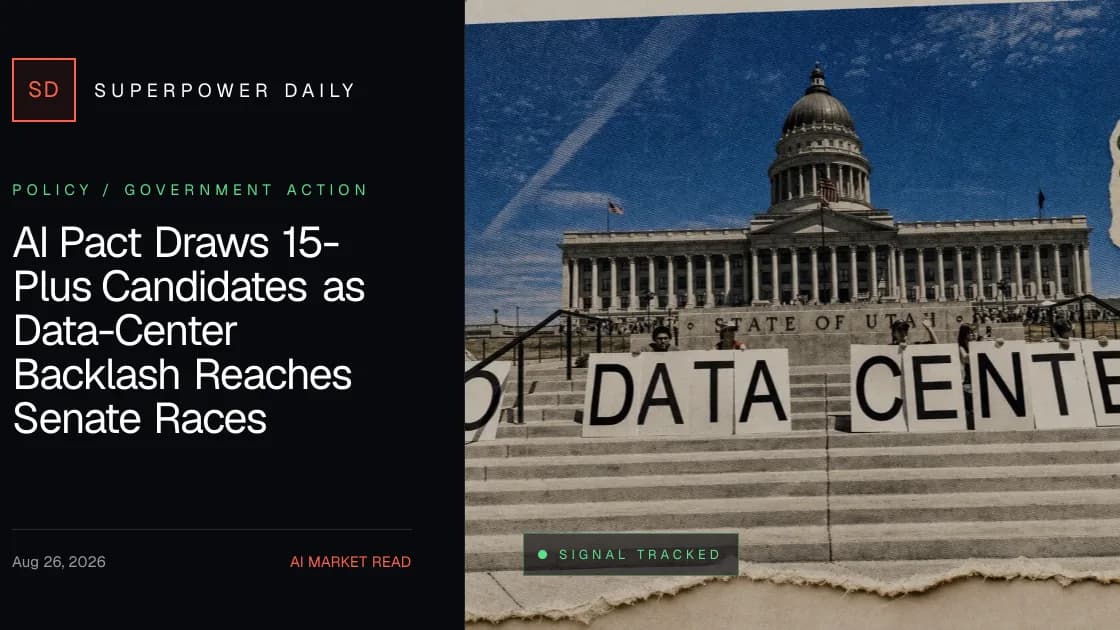
Screenshot: Superpower Daily reporting on The AI Pact developed by MVP and our partner Political Integrity PAC.
Running for office? Sign the AI Pact.
Thirty-five candidates running for office have committed to “building a people-first future, not one for data centers and shareholders,” by signing The AI Pact — a first-of-its-kind pledge developed by MVP’s very own Strategic Media Advisor Rynn Reed and MVP partner Political Integrity PAC.
The premise of The AI Pact is simple: Voters deserve to know which candidates are committed to AI accountability, transparency, equity, and fairness, and to curbing the proliferation of data centers in their communities. Candidates who sign the pledge are committing to five pillars:
- No data center giveaways.
- Mandatory safety reviews.
- An AI dividend.
- Accountability for AI companies.
- No bailouts for big AI.
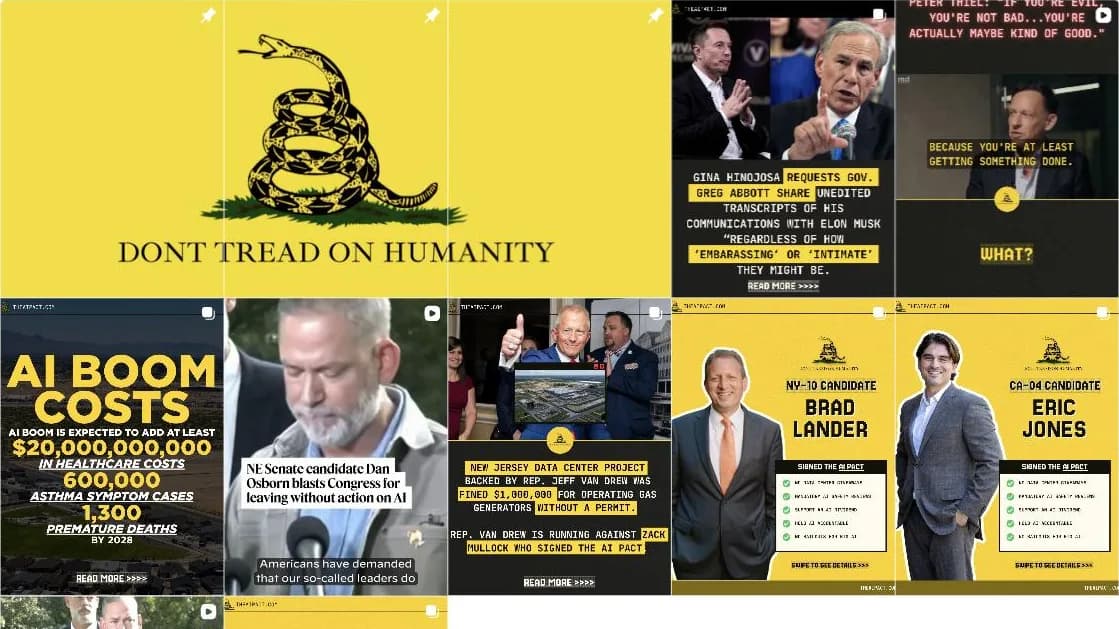
Screenshot: MVP partner Political Integrity PAC grid of Instagram posts.
In the past month, the number of Pact signers has more than doubled from 15 to 35. Signers range from candidates running in safe races like Democrat Brad Lander in New York’s 10th Congressional District to candidates running in true toss-up, must-win races, like Democrat gubernatorial candidate Gina Hinojosa in Texas and independent Senate candidate Dan Osborn in Nebraska.
Osborn has been one of the most outspoken candidates on the need to regulate AI, recently hosting a press conference where he mentioned The AI Pact and drew clear distinctions between himself and his opponent, GOP incumbent Pete Ricketts.
The AI Pact is also tracking where AI super PAC and AI executive donations are going, putting the “count” in “accountability.”
The AI Pact is also tracking where AI super PAC and AI executive donations are going, putting the “count” in “accountability.” The Pact is leaving no Big-Tech-money-in-politics stone unturned for voters, many of whom are weighing the issue carefully as they go to the ballot box.
The Pact is making headlines, with a slew of coverage in political, tech, and finance media outlets, elevating this extremely salient issue for voters across the political spectrum. Here’s a sampling:
- Wired: “Candidates Are Signing a Pact Promising Action on Data Centers and AI Safety”
- The Hill: “Democrats in key House, Senate races sign AI regulation pledge amid data center scrutiny”
- Crypto Briefing: “More than 15 candidates sign pledge on AI and data-center rules”
- Investor’s Business Daily: “How Your State's AI Data-Center 'Moratorium' Really Works”
- Superpower Daily: “AI Pact Draws 15-Plus Candidates as Data-Center Backlash Reaches Senate Races”
The AI Pact is just one example of how MVP is working directly with our partners to give voters the information they need as they head into the midterms.
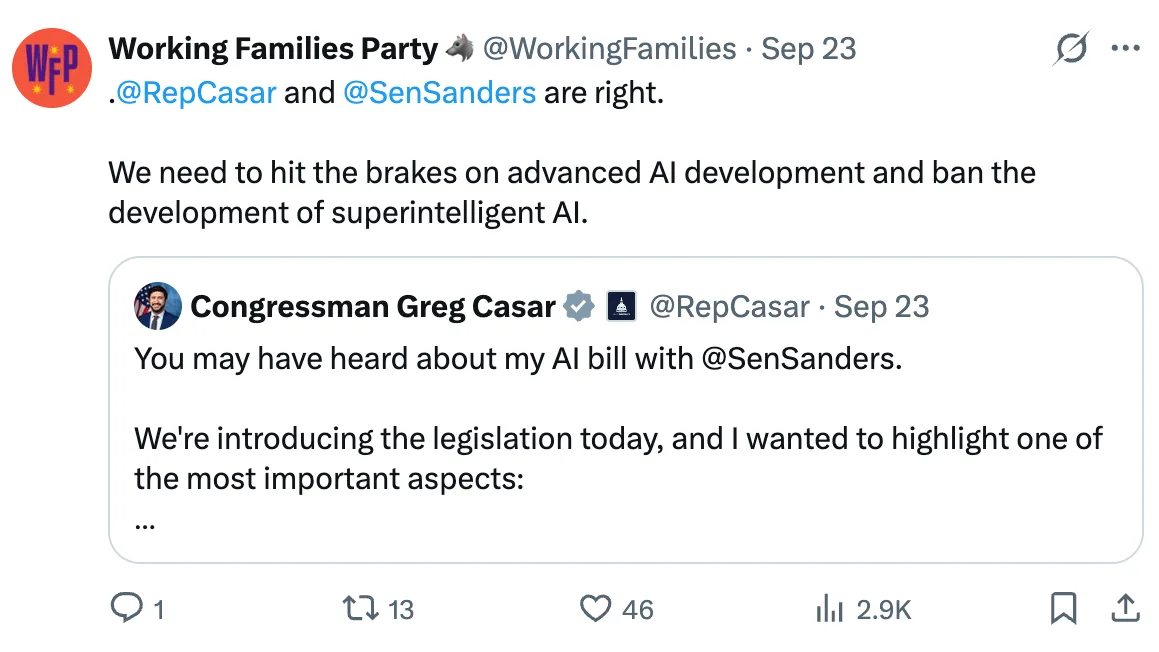
Screenshot: Working Families Party posting on Twitter about the need to rein in AI and support legislation introduced by Rep. Greg Casar and Senator Bernie Sanders that would ban the development of artificial superintelligence.
Working Families Party: We’ll support you if you support reining in Big Tech.
MVP partner Working Families Party (WFP) recently made headlines with an announcement that it is shifting its focus to reining in Big Tech, including AI. WFP National Director Maurice Mitchell released a memo titled “We’re in the path of a wrecking ball,” which details the public safety, environmental, political, and societal threats that the rise and rapid evolution of AI presents.
"The WFP is committing over the coming years to electing candidates — at all levels of government — willing to rein in the AI industry."
WFP is hip to the fact that the Big Tech CEOs who created and are profiting massively from AI’s rise will not be the ones to save us, despite their recent calls for a slowdown. The federal government must step in, but as WFP notes, neither Republicans nor Democrats have done much — if anything — to take concrete action.
Enter WFP’s new political focus: “running candidates who are committed to reining in Big Tech.”
WFP’s memo outlines the existential threat posed by unregulated AI, the environmental impacts of data centers, and the outsized influence of Big Tech corporations in politics. It also names names of the 2026 candidates who have made AI regulations, data center moratoriums, and protecting workers from AI displacement strong pieces of their campaign platforms.
As the memo states:
“The WFP is committing over the coming years to electing candidates — at all levels of government — willing to rein in the AI industry. That work begins in the midterms, where the WFP is working to elect Abdul El-Sayed (MI-Sen), who has put forward one of the most comprehensive AI platforms of the cycle; Angie Nixon (FL-Sen), who has called for reining in big tech and protecting workers from AI displacement; and Will Lawrence (MI-7) and Justin J. Pearson (TN-9), who are actively campaigning on a federal data center moratorium.”
The strategic focus may be new, but this role for WFP is not. As a constructive alternative to the two-party system that so many Americans are dissatisfied with, WFP — and the candidates it supports — provides a political home for voters who, in this case, are fed up with corporate money in politics and want to see meaningful government action to protect our future from the very real threats that AI and Big Tech pose.
What’s next for MVP and AI?
In short, a lot! There is so much to say on this topic. Rest assured, we will say more in the time ahead, because AI and its influence on our lives is not going away.