Electoral targets
U.S. Senate
Flip Maine's Senate seat
by defeating Republican incumbent Susan Collins.
U.S. House
Defend the 2nd congressional district
by electing a Democrat to the open seat.
In Maine, our partners are organizing to defeat one of the most stubbornly tough GOP incumbents in the Senate — and to protect what is likely the most vulnerable Democratic seat in the House. These wins will help us end Republican control of Congress, block the Trump agenda for the next two years, and take meaningful steps toward a bold, federal Democratic trifecta in 2028.
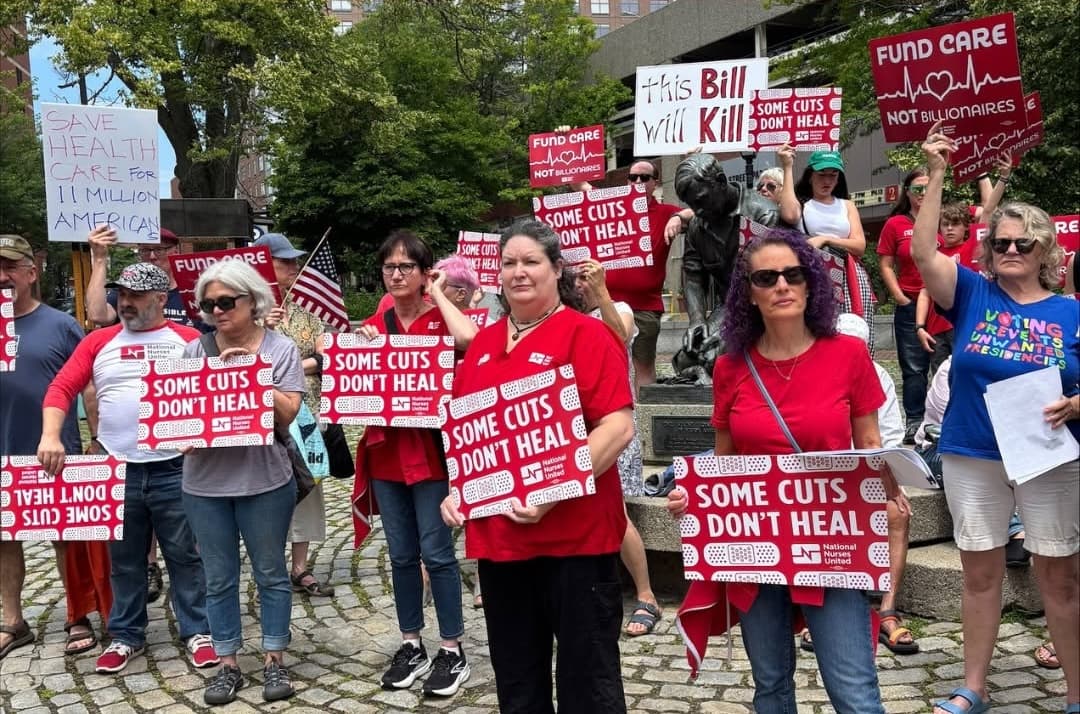
Photo: Maine People's Alliance, protesting Medicaid cuts.
by defeating Republican incumbent Susan Collins.
by electing a Democrat to the open seat.
With control of the U.S. Senate on the line, Maine is one of our strongest potential pickup seats — and winning it could be the difference between a Democratic majority or two more years of Republican havoc. Victory would also vastly improve our odds of holding the Senate in 2028.
With Congressman Jared Golden not seeking re-election, ME-02 is an open congressional seat in a district where strong local organizing and deep community ties have kept Democrats competitive, despite Republican presidential margins.
Maine has already faced some of the Trump administration's most aggressive federal policies firsthand. In January, a rapid ICE enforcement surge galvanized thousands across the state. Electing Democrats to Congress is the most direct first step to preventing and eventually repairing the damage from these abuses.
Maine is one of just two states to allocate Electoral College votes by congressional district. Organizing competitively in ME-02 this year builds the infrastructure to contest that individual Electoral College vote in 2028, which, if the presidential race is close, could be pivotal to regaining a Democratic White House.
Janet T. Mills (D)
Shenna Bellows (D)
Aaron Frey (D)
Susan Collins (R)
Angus King (I)
Democrats: 2
Republicans: 0
Democrats: 20
Other: 1
Republicans: 14
Appointed by Democrat: 7
Appointed by Republican: 0
Democrats: 75
Other: 3
Republicans: 71
Vacancies: 1
| 2024 | Kamala Harris (D) | 6.9% | |
| 2020 | Joe Biden (D) | 9.1% | |
| 2016 | Hillary Clinton (D) | 2.9% | |
| 2012 | Barack Obama (D) | 15.1% |
| 2024 | Angus King (I) | 17.3% | |
| 2020 | Susan Collins (R) | 8.6% | |
| 2018 | Angus King (I) | 19.1% | |
| 2014 | Susan Collins (R) | 36.2% |
Since MVP began investing in Maine in 2019, the organizing ecosystem has expanded significantly — thanks in large part to MVP’s investments. Once dominated by a single large, statewide organization, the landscape now features a network of groups working in rural communities, urban centers, immigrant neighborhoods, and across the labor movement.
These groups have built and refined voter engagement programs across multiple election cycles, combining scaled member mobilization with deep base building in communities that are routinely overlooked. In 2026, they are positioned to run state-wide coordinated electoral organizing and voter mobilization programs, with particular depth in ME-02.

Maine People's Alliance (MPA) is Maine's largest community action group, with 32,000 dues-paying members.
Maine Youth Power is a statewide, multi-issue youth organizing organization, focused on rural youth.
Food AND Medicine is a grassroots member-based organization that works to address the root causes of poverty.
Community Action Alliance (CAA), based in Lewiston/Auburn, builds power with Black and immigrant youth.
Maine Labor Climate Council is a coalition of labor unions representing working Mainers.
Maine's progressive organizing ecosystem is anchored by MVP partner Maine People's Alliance (MPA). MPA has 32,000 dues-paying members — one of the largest per-capita membership bases of any statewide organization in the country. With chapters across the state, MPA is well-positioned to turn out low-propensity Democratic-leaning voters en masse in the U.S. Senate and House races.
MPA has been knocking on doors since April, ahead of Maine’s June 9 primary elections, and will now scale their field program to maximize turnout this November.
MPA will also leverage its multi-tiered membership program by providing ongoing training and leadership development opportunities, not only to mobilize its members to vote, but also to empower them to organize in their own communities.
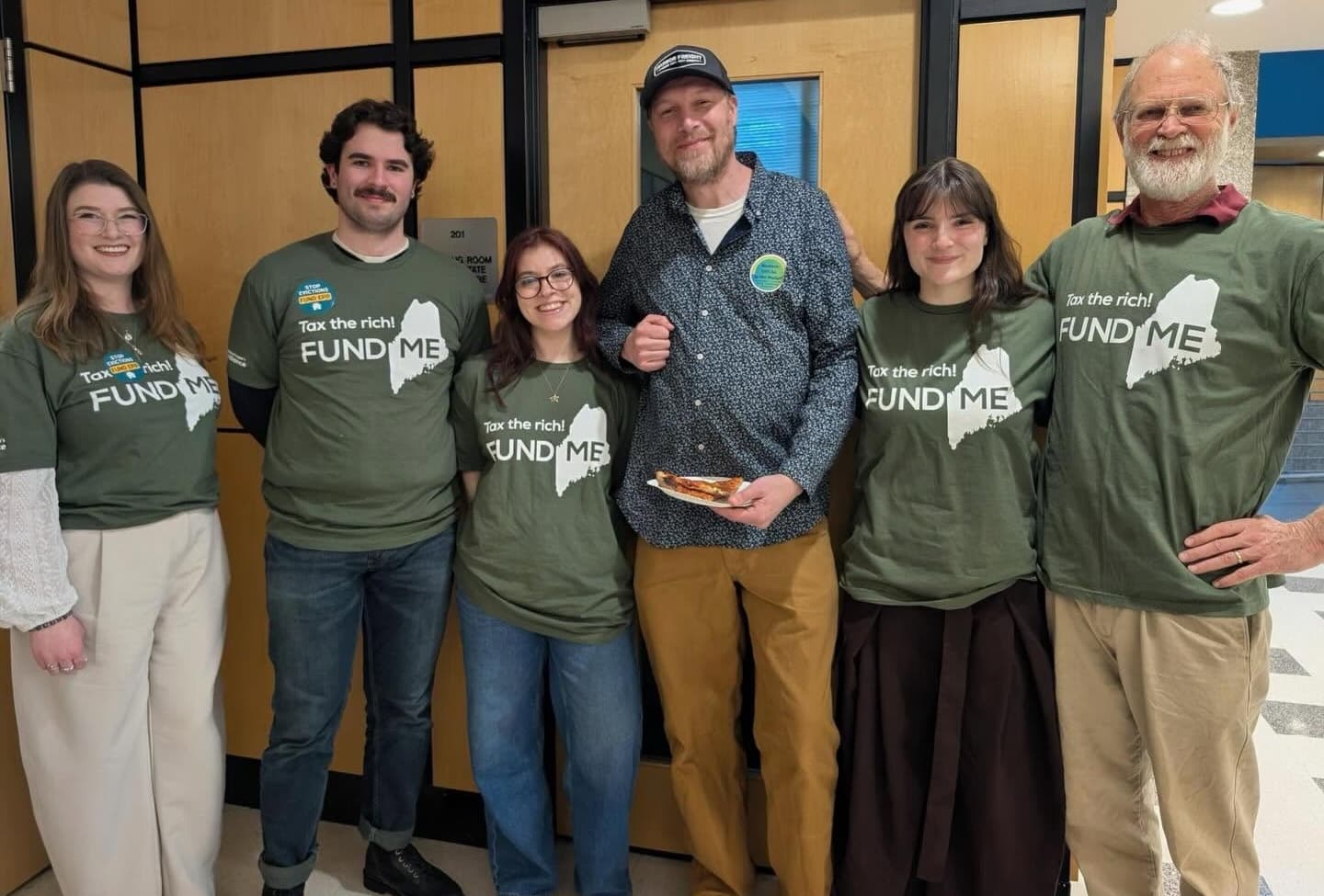
Photo: Maine People's Alliance at the Maine State House.
Maine is more than 93% white, with a substantial rural and working-class population. As The Maine Beacon points out, it is one of the only states with this demographic profile that Democrats have historically held power. To maintain and expand Democratic power in the state, we must engage and mobilize white, rural, working-class voters at scale across the state, with an emphasis on ME-02.
Food AND Medicine (FAM) has spent more than 25 years building ties in eastern Maine's working-class communities. With a strong regional reputation and a voter engagement program developed over multiple election cycles, FAM is positioned to anchor the federal field program in eastern Maine, drawing on relationships built long before any given election season.
FAM runs community-based programs that provide services to Mainers, like food access, gardening skills, and access to transportation, and connects those services to civic engagement and electoral organizing. With deep roots in communities across eastern Maine, FAM has built the trust and widespread name recognition needed to energize and mobilize rural, working-class voters.
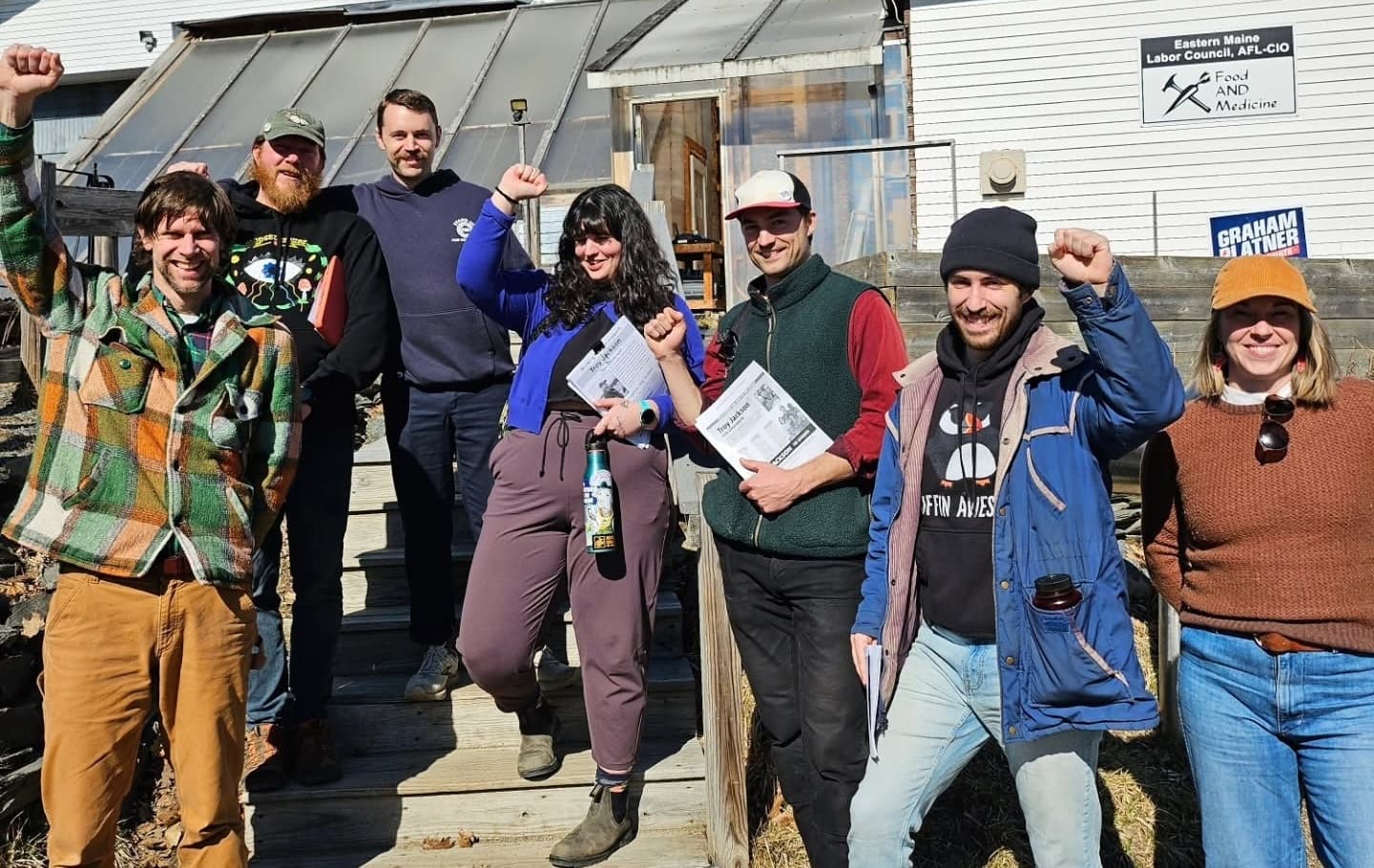
Photo: Food AND Medicine organizers.
Maine Labor Climate Council (MLLC) is a leader of economic and environmental organizing in Maine and is bringing that lens to electoral organizing this year to do something different and necessary: organize residents of mobile home parks.
These residents are largely working-class, rural Mainers whom MLCC is engaging around shared economic grievances, including predatory landlords and longstanding housing insecurity. Many of these voters have felt abandoned by both parties and have been susceptible to right-wing messaging.
These communities are persuadable when engaged by local trusted messengers, and MLCC's peer-to-peer model builds the trust and political agency to do just that. In a close ME-02 race, this constituency could be the margin of victory.
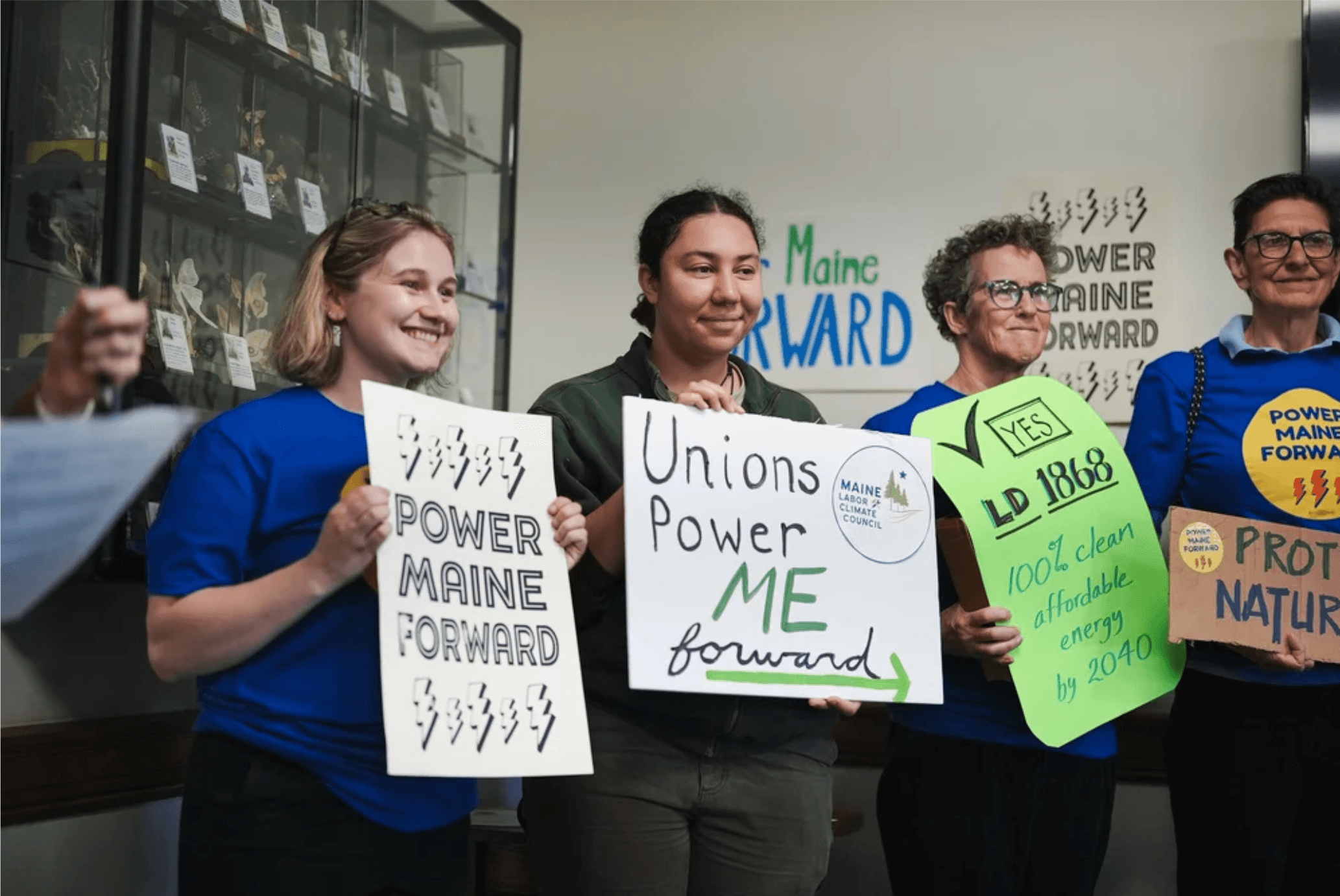
Photo: Maine Labor Climate Council legislative advocacy event.
January's federal ICE enforcement surge galvanized Maine's immigrant community — and our partners are turning that energy into durable federal voter engagement.
Community Action Alliance (CAA), based in Lewiston/Auburn, organizes with Black and African immigrant youth, developing leaders and building toward a voter mobilization program in a city that sits within ME-02 and is central to the district's electoral math. In a close federal race, CAA's organizing with these communities could provide the margin of victory.
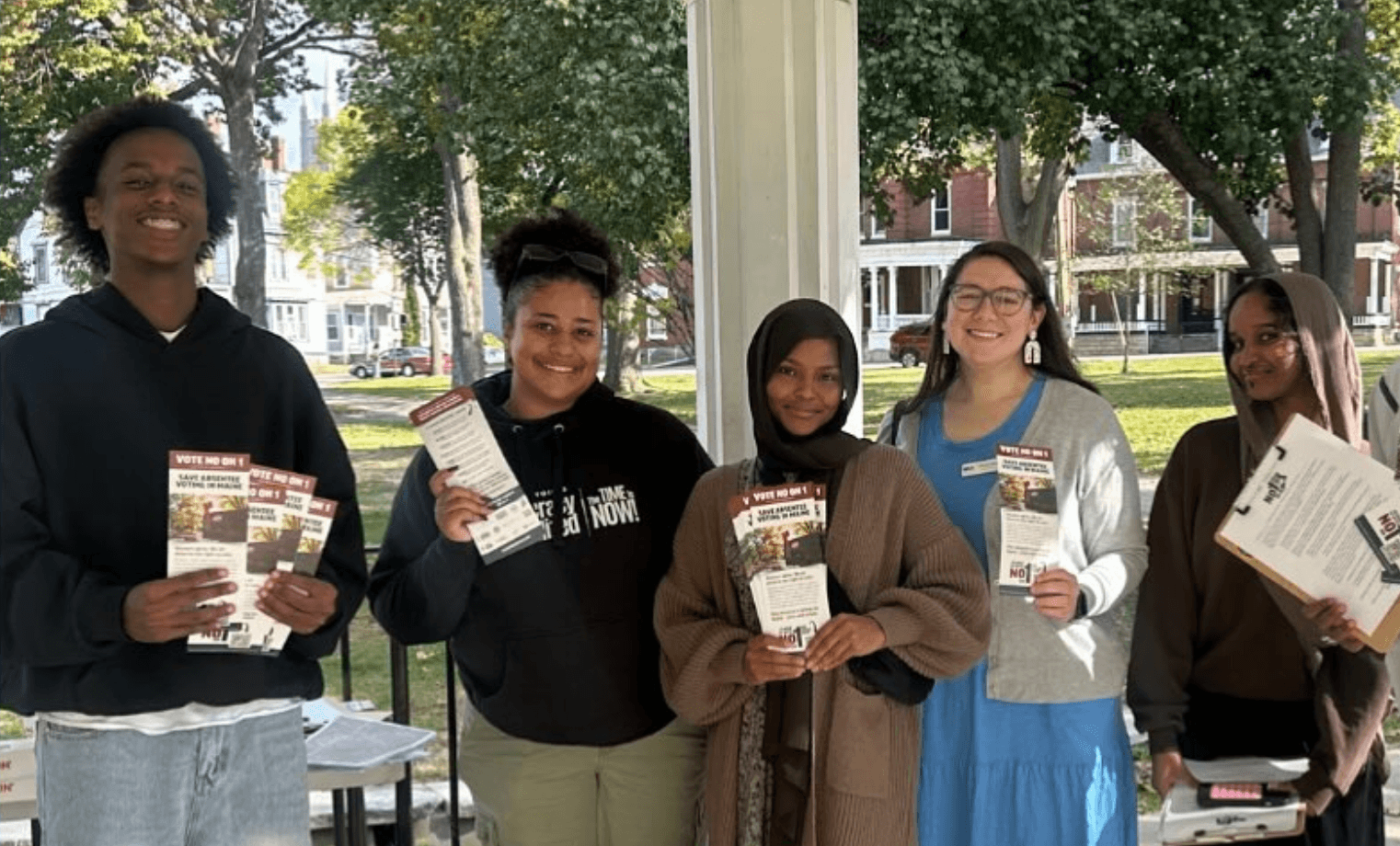
Photo: Community Action Alliance getting out the vote.
Maine Youth Power organizes rural young people — a demographic systematically underregistered and underengaged in Maine politics. MYP's rural youth organizing spans both congressional districts, but with a greater presence in ME-02, and a focus on reaching young voters in communities where no other progressive organization is running a sustained field program.
In 2026, MYP will register, educate, and mobilize young voters for the U.S. Senate and ME-02 races through door knocking, phonebanking, coalition events, candidate forums, and more.
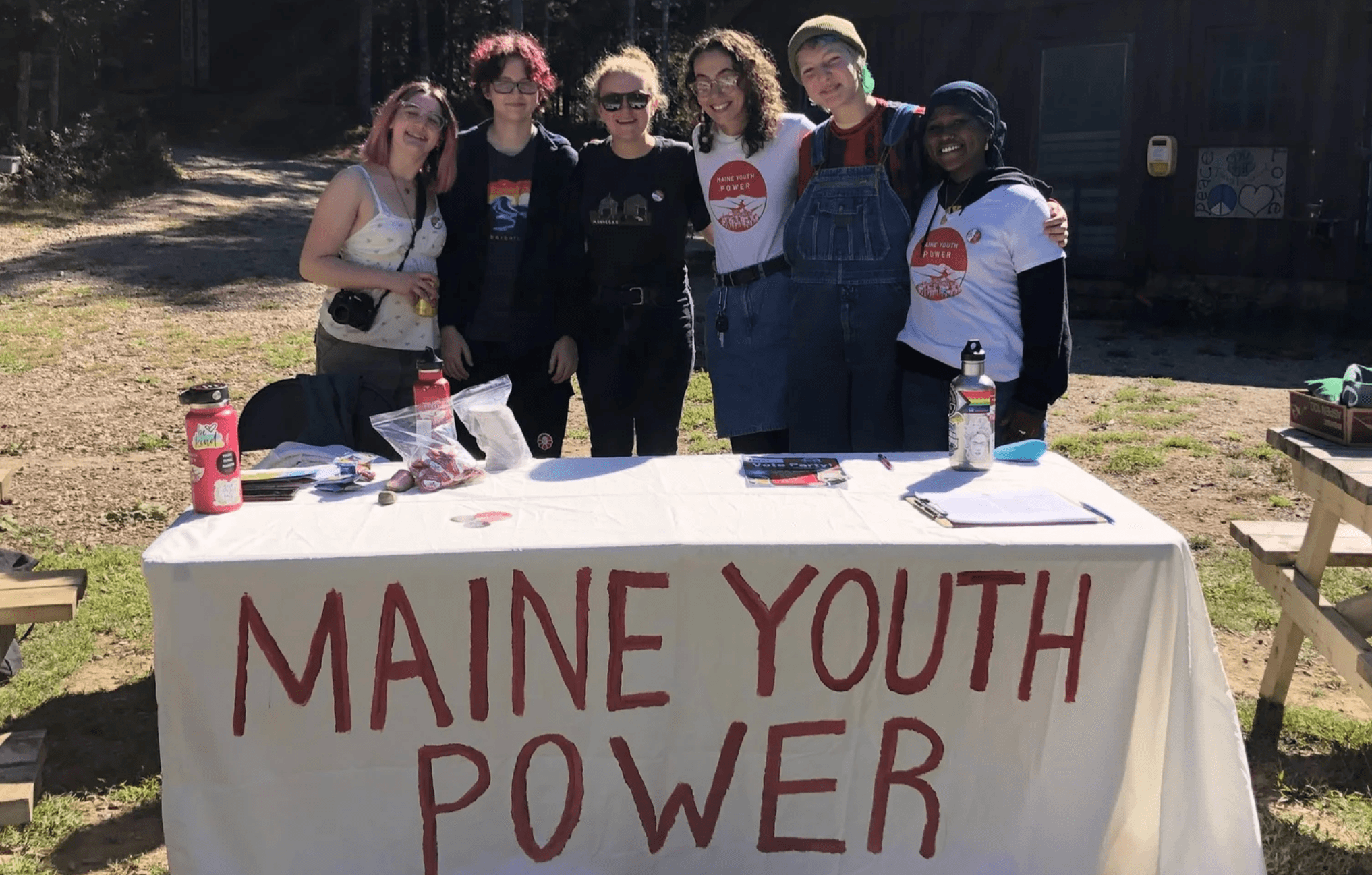
Photo: Maine Youth Power
Gifts over $10,000: Contact your MVP liaison or email advisor@movement.vote to discuss options.
Movement Voter PAC is a federal political committee that primarily supports the political work of year-round organizing groups working to elect progressive candidates up and down the ballot.
PAC donations maximize impact on elections by giving voter organizing groups the most freedom to engage in partisan or political activity, such as endorsing candidates.
Donations must include full name, email, address, occupation, and employer. Donations are not tax-deductible nor anonymous, and will be reported to the FEC and state campaign regulators. FEC ID#: C00728360
Sign up for timely event invites and updates on the work of MVP and our grantee partners. No spam, unsubscribe anytime.