In North Carolina, partners are organizing to flip a U.S. Senate seat, defend a U.S. House seat, re-elect a Democratic state Supreme Court justice, and block a GOP supermajority in the state legislature.
These wins will help fight back against authoritarianism, partisan gerrymandering, and harmful state legislation, while setting us up to win a federal Democratic trifecta in 2028.
If we want a Democratic U.S. Congress and President in 2029, we need to protect NC-01 and flip a North Carolina Senate seat this year and in 2028, when we must also secure the swing state’s support for the Democratic presidential nominee.
Blocking the Trump agenda
Flipping a U.S. Senate seat and blocking a GOP supermajority in the North Carolina General Assembly (NCGA) will help stop Trump’s authoritarian attacks.
Emboldening Democrats
This year, MVP partners helped bold primary challengers unseat Democratic incumbents who had repeatedly voted with Republicans to override vetoes of harmful legislation. These crucial interventions will support the Democratic Party as a whole to regain the multiracial, working-class coalition needed to win in November and beyond.
Unrigging House and legislative maps
Re-electing Anita Earls to the state Supreme Court this year will help pave the way for flipping the Court in 2028 and passing fair electoral maps after the 2030 census — all the more critical after the Supreme Court gutted the Voting Rights Act.
Section 2
Landscape Analysis
Balance of Power
Governor
Josh Stein (D)
Secretary of State
Elaine Marshall (D)
Attorney General
Jeff Jackson (D)
U.S. Senate
Thom Tillis (R)
Ted Budd (R)
U.S. House
Democrats: 4
Republicans: 10
State Senate
Democrats: 20
Republicans: 30
State Supreme Court
Democrats: 2
Republicans: 5
State House
Democrats: 47
Other: 2
Republicans: 71
Recent Vote Margins
U.S. President
2024
Donald Trump (R)
3.3%
2020
Donald Trump (R)
1.3%
2016
Donald Trump (R)
3.6%
2012
Mitt Romney (R)
2.2%
U.S. Senate
2022
Ted Budd (R)
3.2%
2020
Thom Tillis (R)
1.8%
2016
Richard Burr (R)
5.7%
2014
Thom Tillis (R)
1.5%
Balance of Power: Notes
U.S. House: With partisan gerrymandering upheld by the courts in 2023, the state’s congressional delegation shifted from 7-7 to a 10-4 Republican majority after 2024. In 2026, as a result of redistricting in 2025, Republicans are expected to gain one seat.
U.S. Senate: With GOP incumbent Senator Thom Tillis retiring, North Carolina will have an open-seat U.S. Senate race for the first time in 24 years.
Organizing Ecosystem
North Carolina has a strong civic and voter engagement infrastructure that has grown dramatically over the last decade, with MVP’s partners influencing federal, state, and local elections, including helping secure a state Supreme Court seat in 2025 and primary victories in 2026.
In addition to scaling their voter mobilization programs to knock 4.8 million doors in 2024 — up from 1 million in 2020 — MVP’s North Carolina partners also have strong base-building programs with chapters across the state, including in rural areas and across multiracial, working-class communities who are developing and leading their own community-based campaigns to build long-term power.
Carolina Federation is a statewide organization that works to build power among Black, Brown, and working-class people in urban and suburban counties.
Down Home North Carolina
Down Home North Carolina is a statewide grassroots organization that focuses on building power for the multiracial working class in small towns and rural areas.
NCAAT in Action
NC Asian Americans Together in Action (NCAAT in Action) is a statewide organization that aims to educate, organize, and mobilize the AAPI community in North Carolina.
Siembra NC
Siembra NC is the leading organization in the fight to protect immigrant residents from ICE, building durable trust and relationships with voters along the way.
Workers Vote
Workers Vote is the PAC arm of UNITE HERE, which represents Charlotte airport workers in NC. They deploy union workers to do partisan civic engagement across the state.
Section 4
Electoral Targets: A Closer Look
With GOP Senator Thom Tillis’ retirement, North Carolina presents one of the best opportunities to pick up a Democratic seat in the U.S. Senate: electing former Governor Roy Cooper.
Cooper, who was twice elected to statewide office, has consistently polled ahead of his GOP opponent, Michael Whatley. In 2024, while Trump won by 3 points, Democratic Governor Josh Stein won by 15 points — a difference that signals Democrats’ ability to compete, especially statewide, and the power of organizing to shape outcomes.
To end the Trump regime once and for all, we must win a federal Democratic trifecta in 2028. To get there, we have to elect Roy Cooper to flip one North Carolina Senate seat this year, then flip North Carolina’s second Senate seat in 2028, and help the Democratic presidential nominee win North Carolina’s 16 electoral college votes.
That’s the multi-year path to victory, and it starts now.
In 2024, Democrat Don Davis won his seat in NC-01 by just 2 points. Now, after the North Carolina GOP gerrymandered NC-01 in Trump’s mid-decade redistricting war, Davis has an even harder uphill battle. But with enough investment, there is a viable path forward to protect this vulnerable seat and help Democrats flip the U.S. House this year.
The newly drawn district covers much of northeastern North Carolina, including parts of the state’s “Black Belt” — an area with a significant Black population. MVP partners are active in many of these communities, including Roanoke Rapids (where they led a robust canvass program ahead of the March primary elections), Rocky Mount, and Elizabeth City.
In 2026, Democrats have overperformed by an average of 11 points in down-ballot special elections and secured flips in 30 down-ballot races since 2025. This promising data means we have a real window of opportunity to overperform this November and overcome our redistricting disadvantage in this and other competitive districts. Local organizing could be the difference-maker, with MVP partners’ programs making up the “margin of effort” that helps decide these tight races.
With partisan gerrymandering upheld by the state Supreme Court in 2023, the state’s congressional delegation shifted from a 7-7 split to a 10-4 Republican majority. Then, in 2025, as part of the Trump-instigated mid-decade redistricting wars, the Republican-controlled NCGA passed a new congressional map, adding one more likely Republican district going into the midterms. So long as the GOP controls the NCGA, the only way we can unrig these maps is to flip the state Supreme Court in 2028 — and the first step is to re-elect Democrat Anita Earls in 2026.
Anita Earls is only one of two Democrats on the state Supreme Court. Now that our partners helped secure Allison Riggs’ 2024 win following a protracted GOP-led court challenge, we must win Anita Earls’ reelection bid decisively. This will set us on the path to flip two additional court seats in 2028 and take back the Democratic majority — the only viable path to achieving fair congressional and legislative maps after the 2030 census.
North Carolina House: Block a GOP supermajority by winning 5 of 12 competitive races.
North Carolina Senate: Break a GOP supermajority by winning 4 of 6 competitive races.
Republicans have lost and regained a supermajority in the NCGA four times in the last six years, effectively deciding control of the state by one legislative seat — even with a Democratic governor in office. This year is no different: The GOP is one seat away from a supermajority in the state House and holds a supermajority by one seat in the state Senate.
In 2025, GOP (and a few Democratic) state legislators overrode Gov. Stein’s vetoes of bills requiring local law enforcement to collude with ICE, forcing teachers to make lists of books in their classrooms, and slashing climate protections. Blocking a GOP supermajority in the state legislature will allow Democratic Governor Josh Stein to veto harmful GOP legislation with less chance of a veto override.
To block a supermajority in the state House, we need to win 5 of 12 competitive races in rural areas of the state, including along the Virginia and South Carolina borders and outside Rocky Mount, and exurban areas, including outside Charlotte, Raleigh/Durham, Asheville, and Winston-Salem. This includes House Districts 24, 25, 32, 35, 37, 48, 62, 73, 74, 98, 105, and 115.
To break the supermajority in the state Senate, we need to win 4 of 6 competitive races, concentrated in suburban and exurban areas of major metros like Charlotte and Raleigh. These districts include Senate Districts 7, 11, 13, 18, 34, and 42.
Section 5
How We Win
Strategy #1
Mobilize key voters: Turn out Black, Latine, and AAPI voters in support of Democrats statewide and down-ballot.
In North Carolina, people of color make up a sizable demographic, with Latine and Asian American and Pacific Islander (AAPI) populations growing at the fastest rates. These communities represent voting blocs that are likely to turn out for Democrats if they are engaged early, by the right messengers, and with effective, culturally-competent strategies.
MVP partners will focus on engaging, mobilizing, and building power with these constituencies to increase turnout for Democratic candidates up and down the ballot, while also strengthening long-term multiracial organizing efforts.
North Carolina A. Philip Randolph Educational Fund focuses on underserved Black communities in eastern North Carolina and Raleigh. They will register and mobilize their constituencies to turn out for Democratic candidates in the U.S. Senate, state Supreme Court, and NCGA races in eastern North Carolina, and to protect Democrat Don Davis in North Carolina’s 1st congressional district.
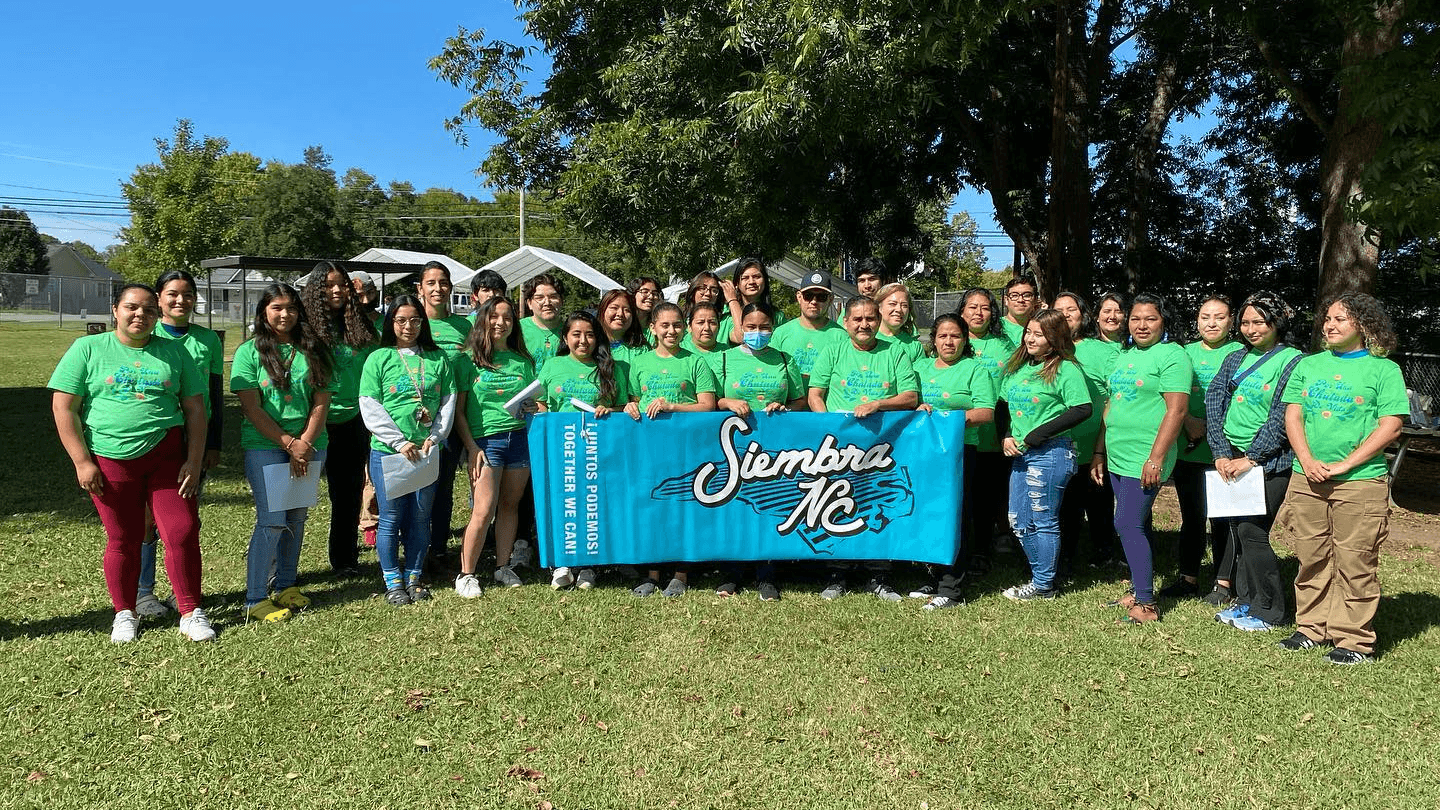
Siembra NC will lead engagement and mobilization of Latine voters, leveraging their strong presence in Latine communities in the Raleigh/Durham/Chapel Hill area and in Charlotte/Mecklenburg County. Siembra NC is the leading organization in the fight to protect immigrant residents from ICE, building trust and strong relationships with voters.
NC Asian Americans Together in Action (NCAAT in Action) is the only organization in the state working to engage AAPI residents. They will work across the state, with a specific emphasis on Wake and Mecklenburg Counties, to turn out AAPI voters for the U.S. Senate, state Supreme Court, and NCGA races.
Photo: Siembra NC organizing community members around the issues they care about.
Strategy #2
Target tipping-point communities: Engage voters in rural areas, small towns, and urban centers to ensure both overlooked and committed Democratic voters turn out in November.
With North Carolina’s diverse geography, we cannot take any areas of the state for granted. We must ensure voters in Democratic strongholds like Charlotte, Raleigh, and Durham turn out for Democratic candidates, while expanding and mobilizing support among multiracial, working-class voters in more rural areas who will likely turn out for Democrats if meaningfully engaged.
Carolina Federation has chapters in four key urban/suburban metro areas — Durham, Forsyth/Winston-Salem, Guilford/Greensboro, and New Hanover/Wilmington — and the organizing power to mobilize voters at scale. In 2024, they knocked 700,000 doors, helping to elect Democratic Governor Josh Stein. They also led the ballot-curing effort in the contested 2024 state Supreme Court race that led to Allison Riggs’ victory. This year, Carolina Federation will strengthen existing chapters while establishing a new chapter in Charlotte/Mecklenburg to mobilize Democratic voters for the U.S. Senate and state Supreme Court races, while bolstering chapters in eastern North Carolina to mobilize voters for Don Davis in NC-01.
Down Home NC is one of the strongest groups in the state, organizing in rural communities and small towns. In 2024, they knocked more than 630,000 doors, helping move several rural counties to the left while much of the nation moved right. This year, they will mobilize rural Democratic voters for the U.S. Senate, state Supreme Court, and NCGA races through their chapters, with a specific focus on Cabarrus, Rowan, Ashe, and Franklin Counties.
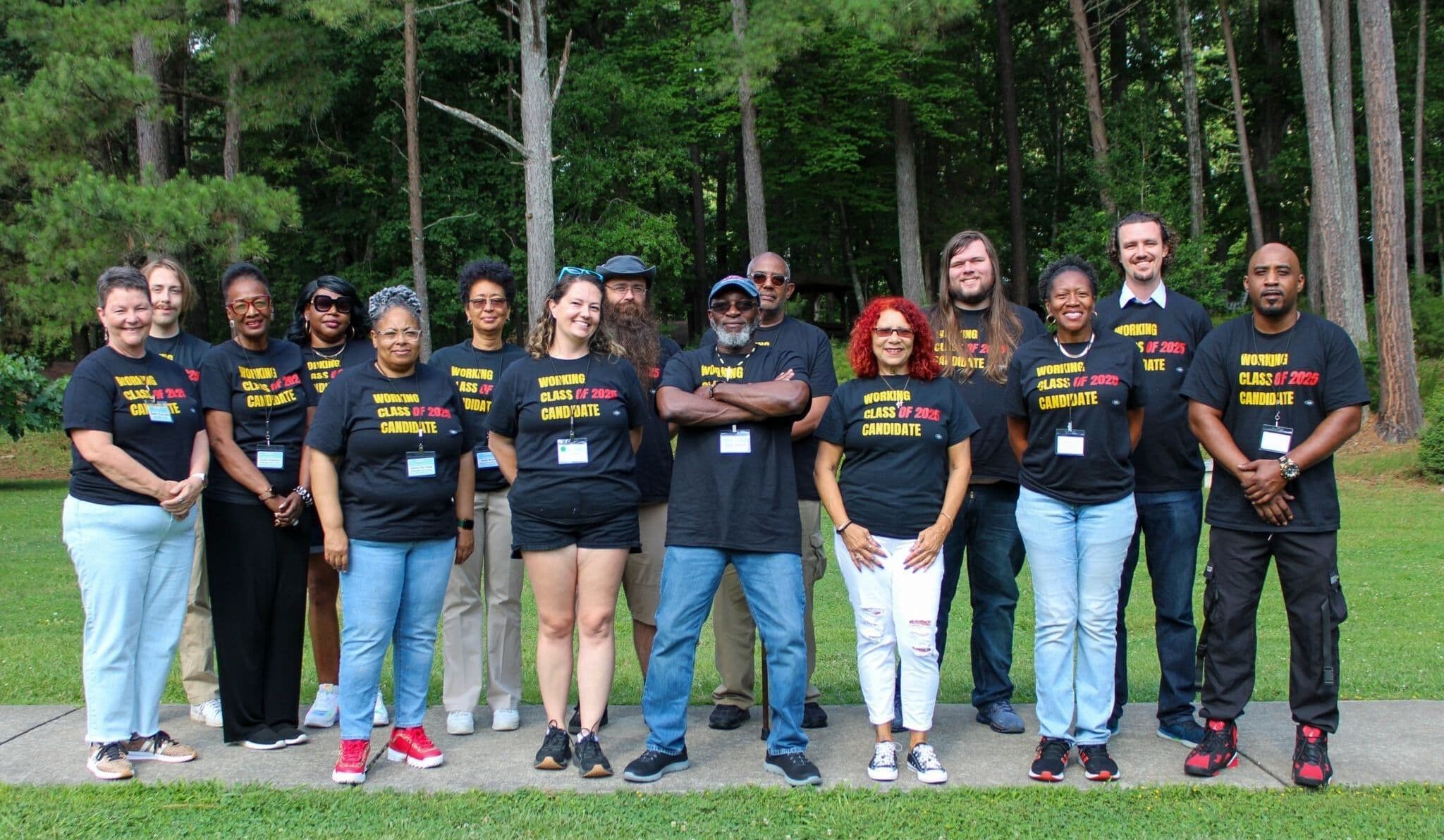
Photo: Graduates of Down Home North Carolina’s first-ever Candidate Academy.
Strategy #3
Leverage organized labor: Deploy union members to engage in scaled election work.
Building strong relationships with and leveraging the power of organized labor is a key component of engaging and mobilizing Democratic voters in North Carolina. MVP has been supporting our partners to build durable, multiracial, working-class alliances between electoral and labor organizing groups to secure more electoral and policy victories. This year, our partners will use those alliances to expand voter persuasion and turnout across the state.
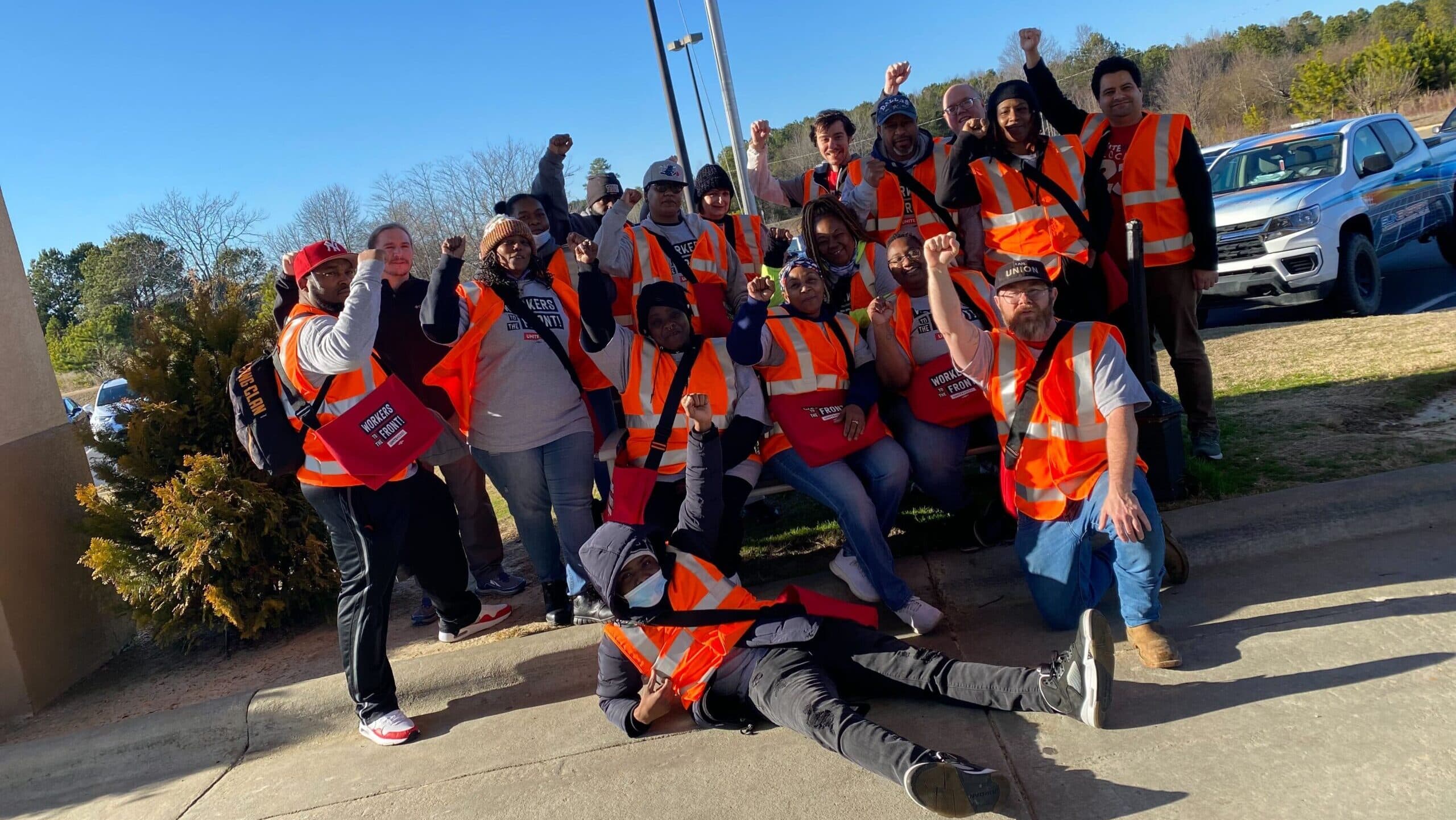
Workers Vote (the PAC arm of UNITE HERE) will continue its successful voter engagement and power-building work to engage its union members in electoral organizing. As some of the most trusted community messengers, labor unions and their members are uniquely positioned to mobilize voters for Democratic candidates whose platforms include labor rights and economic justice. Several labor unions have endorsed Roy Cooper for U.S. Senate and Anita Earls for the state Supreme Court, including the NC State AFL-CIO, the American Federation of Government Employees, and the North Carolina Association of Educators.
Workers Vote canvassing in North Carolina for pro-labor Democrat Rodney Pierce.
Support our work to win power in North Carolina — and across the country.
Gifts over $10,000: Contact your MVP liaison or email advisor@movement.vote to discuss options.
PAC Donations
Movement Voter PAC
Movement Voter PAC is a federal political committee that primarily supports the political work of year-round organizing groups working to elect progressive candidates up and down the ballot.
PAC donations maximize impact on elections by giving voter organizing groups the most freedom to engage in partisan or political activity, such as endorsing candidates.
Donations must include full name, email, address, occupation, and employer. Donations are not tax-deductible nor anonymous, and will be reported to the FEC and state campaign regulators. FEC ID#: C00728360
Stay Connected
Sign up for timely event invites and updates on the work of MVP and our grantee partners. No spam, unsubscribe anytime.